
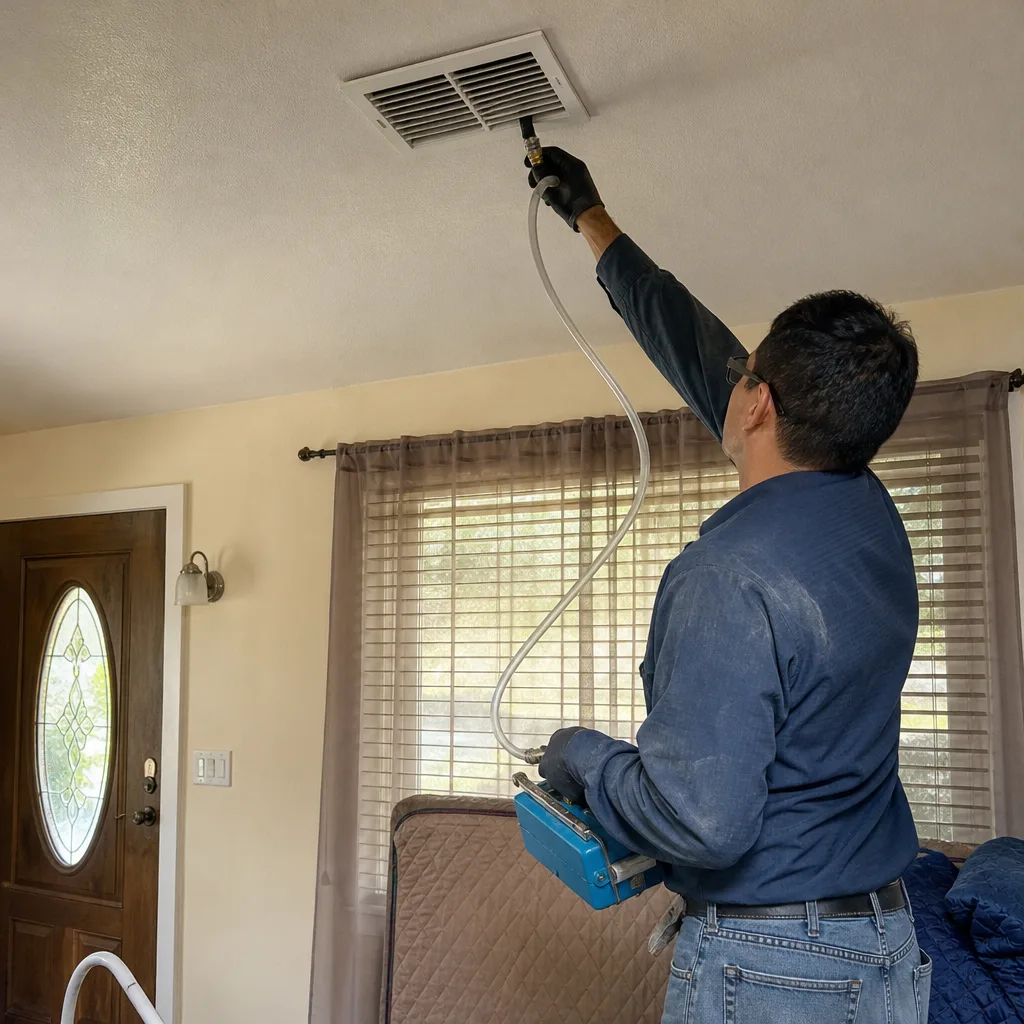
Last updated November 25, 2026
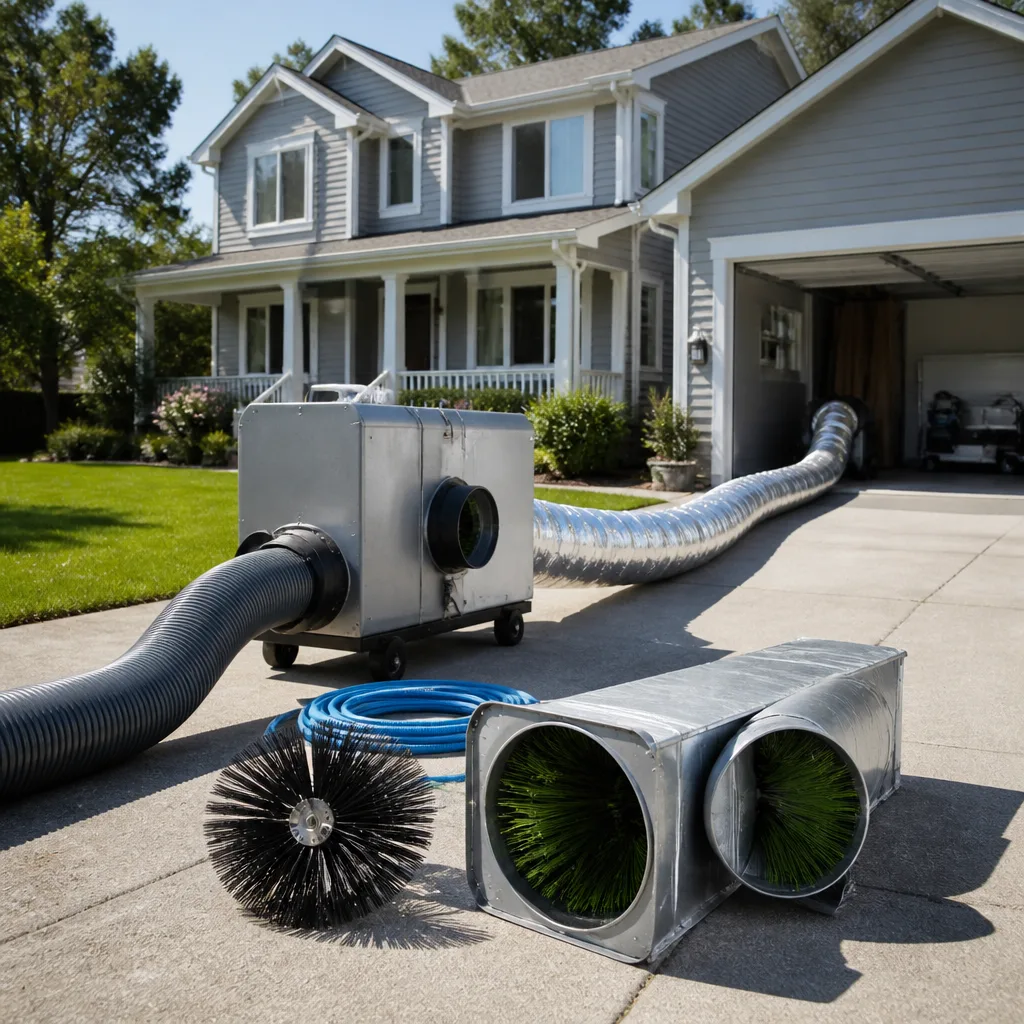 Whole-home duct cleaning
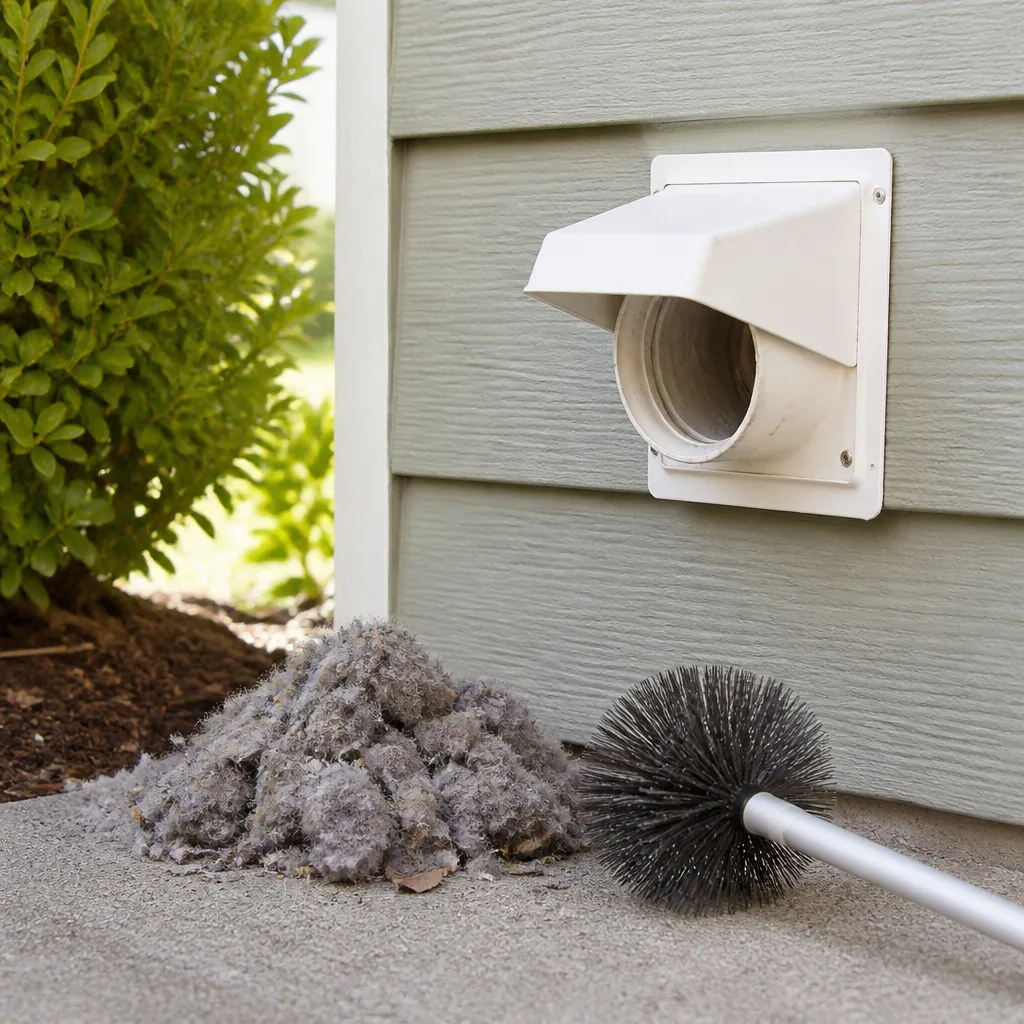 Dryer vent cleaning
 Camera inspection
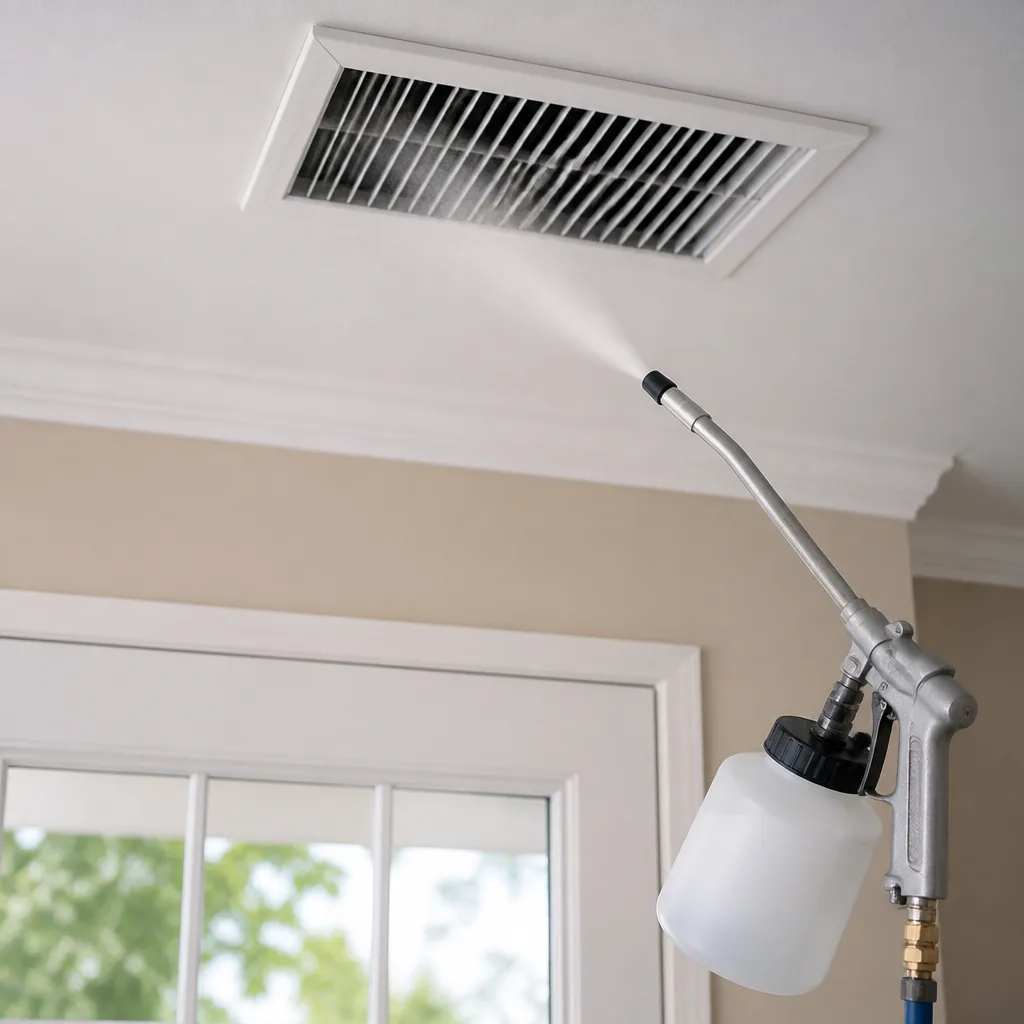 Sanitizing & deodorizing
Whole-system duct and dryer vent check with before-and-after photos - you see exactly what came out of your vents
That "$99 whole-house special" is a bait ad - the real number appears once they are in your hallway, or the "clean" is a shop-vac at the register. We photograph the inside of your ducts before and after instead.
Air Duct Cleaning Maintenance Checklist for Floral Park Homeowners
Most homeowners treat duct cleaning as a once-a-year checkbox. That’s the wrong model, and it’s why a system cleaned in September can be circulating dust again by December. Ducts don’t stay clean because you had them cleaned. They stay clean because of what happens between cleanings, and in Floral Park the timing matters more than most people realize. The village sits just east of the Santa Ana wind corridor, so our dry, particle-heavy wind season and the smoke events that ride in with it do more to your ductwork than any other variable in the region. What follows is the maintenance checklist we’d hand a neighbor, sequenced by season and by the small inspections that catch problems early.
Quick Answer
A durable air duct maintenance routine in Floral Park comes down to four repeating tasks: changing filters on a schedule tied to Santa Ana wind season and local particulate events, inspecting supply and return boots between professional visits without removing them, keeping the condensate drain pan and cooling coil clean so they don’t re-seed cleaned ducts, and scheduling professional cleaning based on conditions (renovation, pest activity, smoke exposure) rather than a fixed annual date. Most homeowners handle the first two themselves and call in a specialist for the rest.
Styles & brands we work with
- Whole-home duct cleaning
- Dryer vent cleaning
- Camera inspection
- Sanitizing & deodorizing
Table of Contents
- Why Duct Maintenance Fails After 90 Days
- Filter Change Intervals for Floral Park’s Wind Season
- How to Inspect Supply and Return Boots Without Removing Anything
- The Drain Pan and Coil Problem That Re-Contaminates Cleaned Ducts
- Checklist Items for Renovation, Pest Activity, and Smoke Events
- Signs a Task Has Crossed Into Professional Territory
- A Season-by-Season Floral Park Maintenance Calendar
- Common Mistakes to Avoid
Why Duct Maintenance Fails After 90 Days
Freshly cleaned ductwork re-collects noticeable debris within about 90 days if the upstream conditions that created the problem weren’t addressed. That’s the part most homeowners never hear. Cleaning removes what’s in the ducts. It doesn’t fix why it got there. In Floral Park, three conditions do most of the re-contamination: unfiltered or under-filtered return air, moisture in the air handler cabinet, and gaps or loose joints that let attic or wall-cavity air pull straight into the duct run.
Think of your duct system as a loop. Air leaves the supply registers, warms or cools the room, and returns through the return grille to the air handler. Whatever is floating in the return air gets a second trip through the system. Dust, pet dander, pollen, and fine smoke particles are small enough to stay suspended and bypass a clogged filter, especially during the dry wind season.
Here’s what we’ve seen in practice, without naming any particular home: systems that stay clean for years rather than months share three traits. The filter is changed on a real schedule, not when someone remembers. Moisture in the air handler is dealt with before it turns into a growth problem. And the ductwork is sealed at the joints, so the system pulls conditioned air from the house instead of contaminated air from unconditioned space. That last one is where air duct cleaning and sealing have to work together, because cleaning a leaky system just re-fills it.
Filter Change Intervals for Floral Park’s Wind Season
In Floral Park, a filter change interval that ignores the Santa Ana wind season will get it wrong. The dry, gusty months pull an enormous amount of fine dust into homes, and that fine dust is what loads a filter fastest. If you’re running a standard 1-inch pleated filter and changing it on a calendar-month schedule year-round, you’re likely over-changing in the wetter months and under-changing in the wind months.
A more useful approach is to calibrate by season and by what you can see:
Filter interval guidance
- Santa Ana wind season and smoke events: check the filter every two to three weeks. A filter that looks gray after ten days isn’t failing; it’s doing its job. Replace it when the media is visibly loaded across the surface.
- Spring pollen months: check monthly. Pollen is coarse enough to load a filter visibly and quick enough to matter in a home with mature landscaping and open windows.
- Mild winter months: monthly check is usually enough, sometimes longer if the system runs less.
- Homes with pets or multiple occupants: shorten every interval above. Dander and hair load a filter faster than dust alone.
- Filter type matters: a 1-inch pleated filter catches more than a fiberglass panel but loads faster. A 4- or 5-inch media cabinet filter holds more debris and can stretch intervals considerably, which is one reason we recommend airflow-compatible upgrades rather than maxing out MERV at the register.
One practical rule: never let a filter run until it’s clogged hard. A badly loaded filter chokes airflow, the blower works harder, and the system pulls air from wherever it can find it, including gaps in the ductwork. For homeowners who want to move past the change-the-filter stage, the filtration systems we work with from Honeywell and Aprilaire let you set an interval on a media cabinet filter instead of checking a thin register filter every few weeks.
How to Inspect Supply and Return Boots Without Removing Anything
You can learn a lot about your ducts with a flashlight and no tools. Supply and return boots are where the visible ductwork meets the room, and they’re the best low-effort window into what’s happening inside the system. What you’re looking for is accumulation, moisture, and air leaks, not a full inspection.
Step-by-step visual check
- Remove the register grille only. Most pop off or release with two screws. Don’t unscrew the boot or reach inside the duct. Put the grille back before you forget which room it came from.
- Look at the boot walls with a flashlight. A thin, even film of dust is normal. What’s not normal is a fuzzy layer, visible debris caught on the seams, or material that looks dark, damp, or clumped.
- Check the return grille for a filter. Some Floral Park homes have a filter slot at the return. If yours does, it should be changed on the same schedule as the air handler filter. If it’s missing, that’s a gap in filtration worth closing.
- Look for streaks or dust rings around the grille edge. Dust accumulating on the wall around the register usually means air is bypassing the grille or the boot is loose against the drywall. That’s a sealing issue, not a cleaning one.
- Note any moisture or staining around the boot and the ceiling or wall near it. Any moisture at a duct connection is a stop-and-call situation, not something to wipe and ignore.
- Write down what you saw with a date next to each room. A written log makes the difference between guessing and knowing when you call for service.
Do this check once a month while you’re changing the filter and it takes a few minutes. Over a few months you’ll have a picture of which registers are collecting faster, which usually points to a specific leak or a return-air problem rather than a system-wide issue.
The Drain Pan and Coil Problem That Re-Contaminates Cleaned Ducts
Every professionally cleaned duct system can be re-contaminated within weeks by a dirty cooling coil or a wet drain pan. It’s the single most overlooked part of duct maintenance, and it’s directly in the air path. The evaporator coil sits in the air handler, and the drain pan sits under it collecting condensation. When the coil fins load with dust, or the pan holds standing water that doesn’t drain, that cabinet becomes a source of biological growth that the blower pushes straight into your freshly cleaned ducts.
During cooling season, condensation is constant. A pan that drains properly and a coil that’s clean keep the air handler dry and neutral. A pan with a slow drain, a clogged line, or a pan that sits even slightly out of level is a moisture problem waiting to turn into an air quality problem. In Floral Park’s dry climate it’s easy to assume this doesn’t matter, but a cooling coil produces water any time the system runs, regardless of the weather outside.
What you can check: look in the air handler cabinet if it’s accessible, and check the drain pan for standing water or slime. Empty it if you can safely do so, and clear visible debris off the drain opening only if it’s easy to reach without disturbing the coil. What you shouldn’t do: scrub the coil yourself. Coil fins are thin and easy to crush, and disturbing a coil that’s already growing something can push material into the ductwork. That’s part of HVAC cleaning territory, and it’s one reason we treat coil and drain pan condition as the first step of a proper cleaning rather than an afterthought.
Checklist Items for Renovation, Pest Activity, and Smoke Events
Some of the most important maintenance work in Floral Park is event-triggered, not calendar-triggered. Three events reliably move a duct system from okay to compromised: a renovation, a pest activity problem, and a regional wildfire smoke event. Here’s what to do after each.
After a renovation
- Change the air filter the day after demolition and dust-producing work stops, and again once the project is fully complete.
- Keep supply registers closed or taped off in the work area during the project if the HVAC is running, and log which rooms were affected.
- Expect drywall dust and insulation fibers to settle in return ducts on the side of the home nearest the work. A visual check at the boots near that area tells you whether professional cleaning is warranted.
- If the HVAC ran during heavy dust work, plan on a professional cleaning. Fine gypsum dust settles in the return side and doesn’t clear on its own.
After pest activity
- Once the pest problem is resolved by a licensed pest professional, check for nesting material and debris in the return boots and the air handler cabinet.
- Look for gaps at the boot or duct connection that pests used to get in. Sealing those is the durable fix; cleaning alone doesn’t prevent a return visit.
- Sanitizing is often worth discussing after rodent or insect activity, because contamination that remains in the duct lining is what keeps causing odor and air quality complaints.
After a wildfire smoke event
- Change the filter immediately. A filter loaded with smoke particles has no capacity left to collect the next round.
- Check for a smoky smell at the supply registers once the outdoor air clears. Persistent odor after the smoke has gone usually means particles have settled into the ductwork and need to be removed, not just filtered.
- If you’re running a portable air cleaner, keep it running indoors with windows closed during the smoke event, and switch the HVAC to recirculate rather than pulling outdoor air.
- Discuss air quality and sanitizing with a specialist if the odor lingers, since smoke residue can settle on duct surfaces and in the coil area.
Signs a Task Has Crossed Into Professional Territory
Some maintenance work belongs in your hands, and some belongs to a specialist. Knowing the line is the difference between maintaining your system and damaging it. Here’s how we draw it: if the task involves opening the air handler cabinet, touching the cooling coil, dealing with moisture or growth, or reaching into ductwork beyond the register opening, it’s professional work.
Call a professional when you see:
- Moisture or growth inside any duct or cabinet. This is a contamination issue and needs proper containment and abatement equipment, not a household cleaner.
- A drain pan that holds water or shows slime. Any standing water in the air handler needs correct drainage, and often coil cleaning.
- Visible debris coating the duct interior beyond a light film. A fuzzy layer or dark clumps mean mechanical cleaning with rotary equipment, not a hand wipe.
- Loose or separated duct joints, crushed flex duct, or sagging runs. These need repair and sealing, and unsealed ducts will re-contaminate after cleaning.
- Persistent musty or smoky odor from registers after cleaning the filter. Usually points to a source beyond the filter, often in the coil area or the duct lining.
- Any electrical work related to the air handler. Wiring is a safety matter. Leave it to a licensed professional.
Our technicians have up to 11 years of experience and use professional-grade equipment, including Rotobrush and Nikro rotary brush and vacuum systems, along with Abatement Technologies containment tools that reflect a contamination-control standard typically reserved for remediation work. That level of equipment is why some jobs that look like a weekend project should be handed off, and some jobs that look serious are routine.
Fire safety is the other professional line worth naming. A dryer vent is a genuine fire risk, and dryer vent cleaning is a job that has to be done right, with proper brush equipment, not a shop vac.
A Season-by-Season Floral Park Maintenance Calendar
If you want a single reference point, use this. It sequences the tasks above into a working calendar that matches Floral Park’s conditions rather than the national generic schedule you’ll find on most maintenance lists.
- Early spring: full visual inspection of every supply and return boot, record findings, check the air handler area for moisture, and clean or clear the drain pan.
- Spring pollen window: check filters monthly. Pollen loads filters fast in homes with landscaping and open windows.
- Late summer before heating season: change the filter before the first system use, and schedule professional service if your boot inspection shows anything beyond a light film.
- Santa Ana wind season: check the filter every two to three weeks, close up the house on high-wind days, and log any visible dust build-up at the boots.
- Wildfire smoke events: change the filter immediately on a smoke event, run the system on recirculate, and note any lingering odor for follow-up.
- After any renovation or pest activity: schedule a professional inspection and cleaning whether or not you’re on schedule. That’s an event trigger, not a calendar one.
- Professional cleaning: decide by condition, not by the calendar. A well-sealed, well-filtered system in Floral Park with no event triggers may go longer between cleanings than one with pets, mature landscaping, and annual renovations.
The other piece of the Floral Park-specific story is the housing stock. Many of these homes have had additions, updated HVAC systems, and duct runs that have been modified more than once. Those changes create joint gaps and unbalanced airflow, which is why we always check for leaks during a cleaning and pair the cleaning with duct repair and sealing when we find them. Cleaning without sealing is a temporary fix.
Common Mistakes to Avoid
- Changing the filter on a fixed monthly calendar year-round. Floral Park’s Santa Ana wind season and smoke events load a filter on a different rhythm than the rest of the year. Calibrating to conditions is what actually protects the system.
- Assuming a cleaned system is a maintained system. Cleaning is a reset, not a maintenance plan. If the coil, drain pan, and duct joints aren’t addressed, the system re-collects debris in about 90 days.
- Accepting a low teaser price on a duct cleaning quote without knowing the scope. A price that doesn’t say which components are cleaned, whether the coil is included, and what happens if damage is found is the setup for a larger invoice later. Ask for one flat price per system, agreed before work starts.
- Wiping a wet drain pan and calling it handled. Standing water needs a drainage fix, not a paper towel. Ignoring it feeds the growth you’re trying to get rid of.
- Skipping a post-renovation filter change. Drywall dust is fine and persistent. A filter loaded with it does nothing for the next few months.
- Letting a filtered return go without a filter at all. If your return grille has a filter slot and it’s empty, that’s an easy gap to close.
- Assuming Floral Park’s dry climate rules out moisture problems. A cooling coil makes condensation regardless of the weather, and the drain pan doesn’t know it’s dry outside.
See the difference
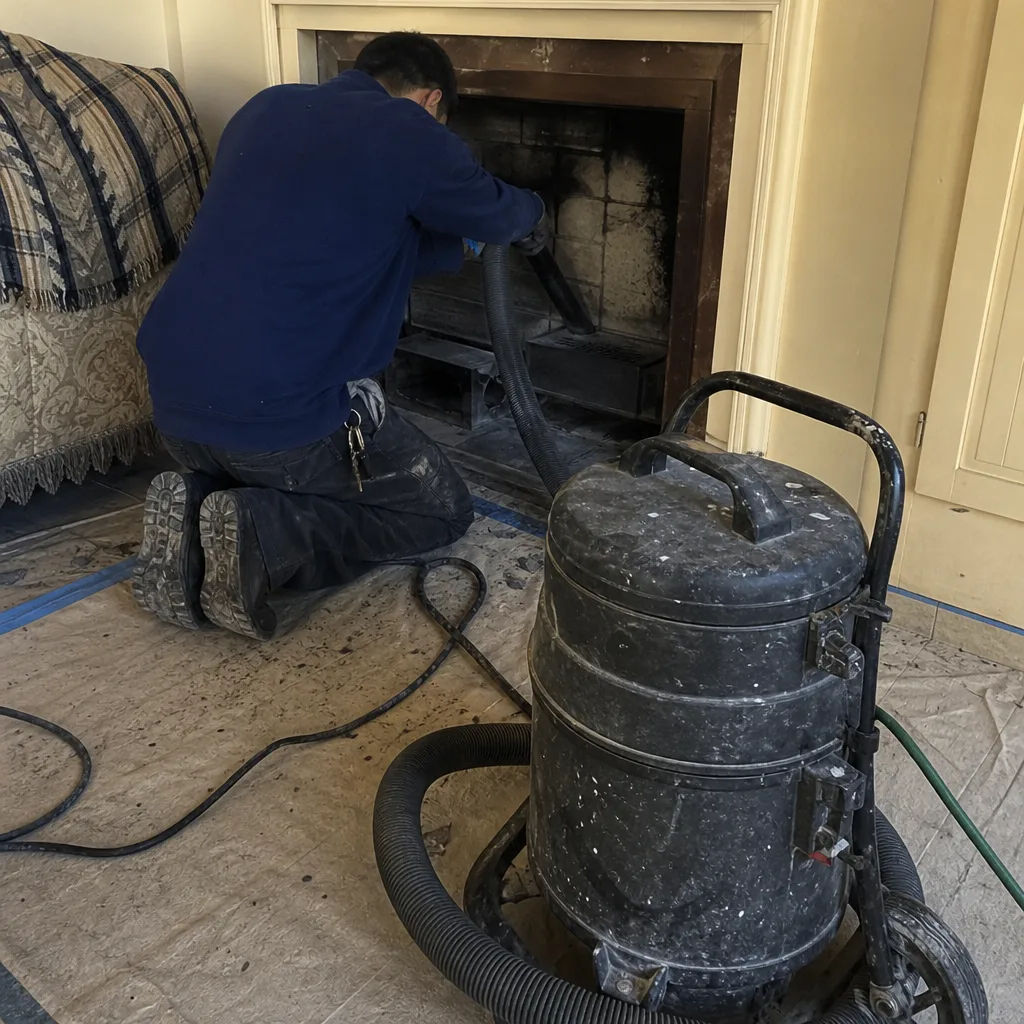 Before
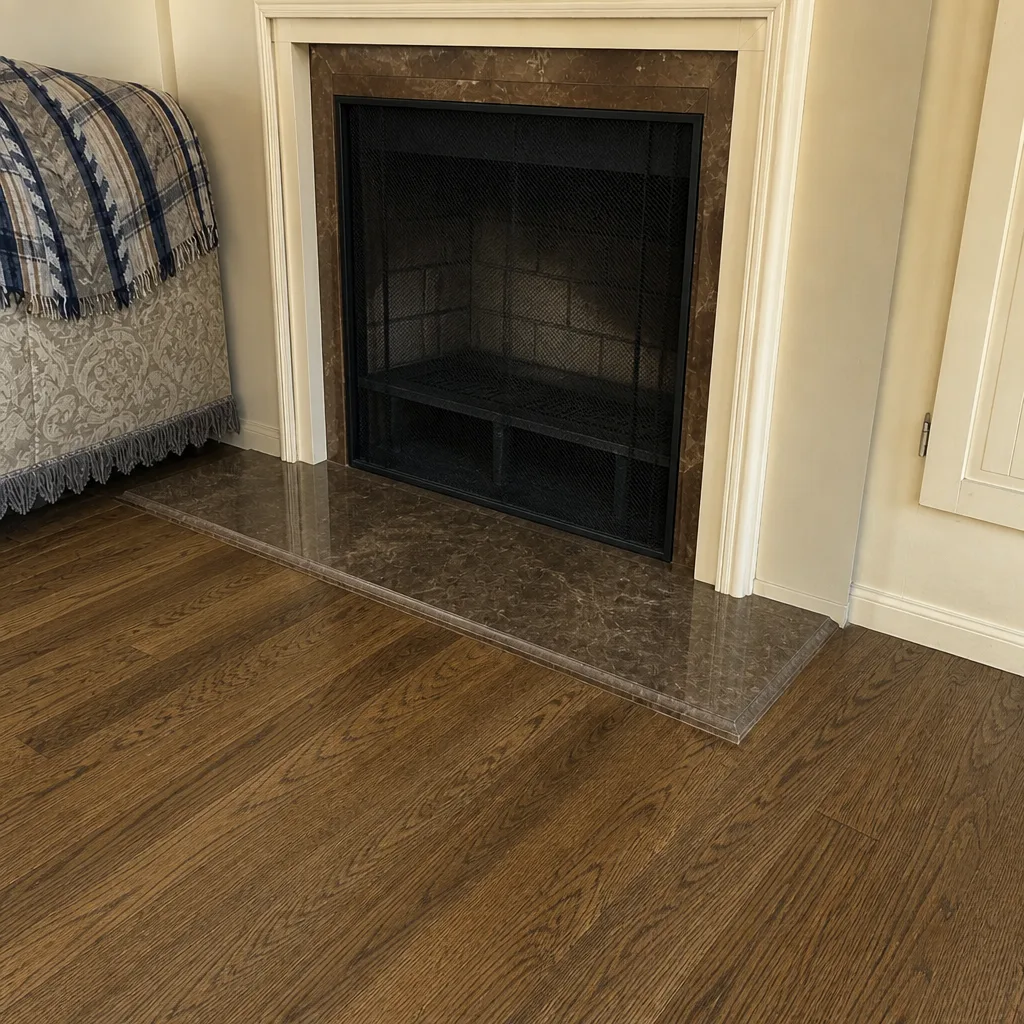 After
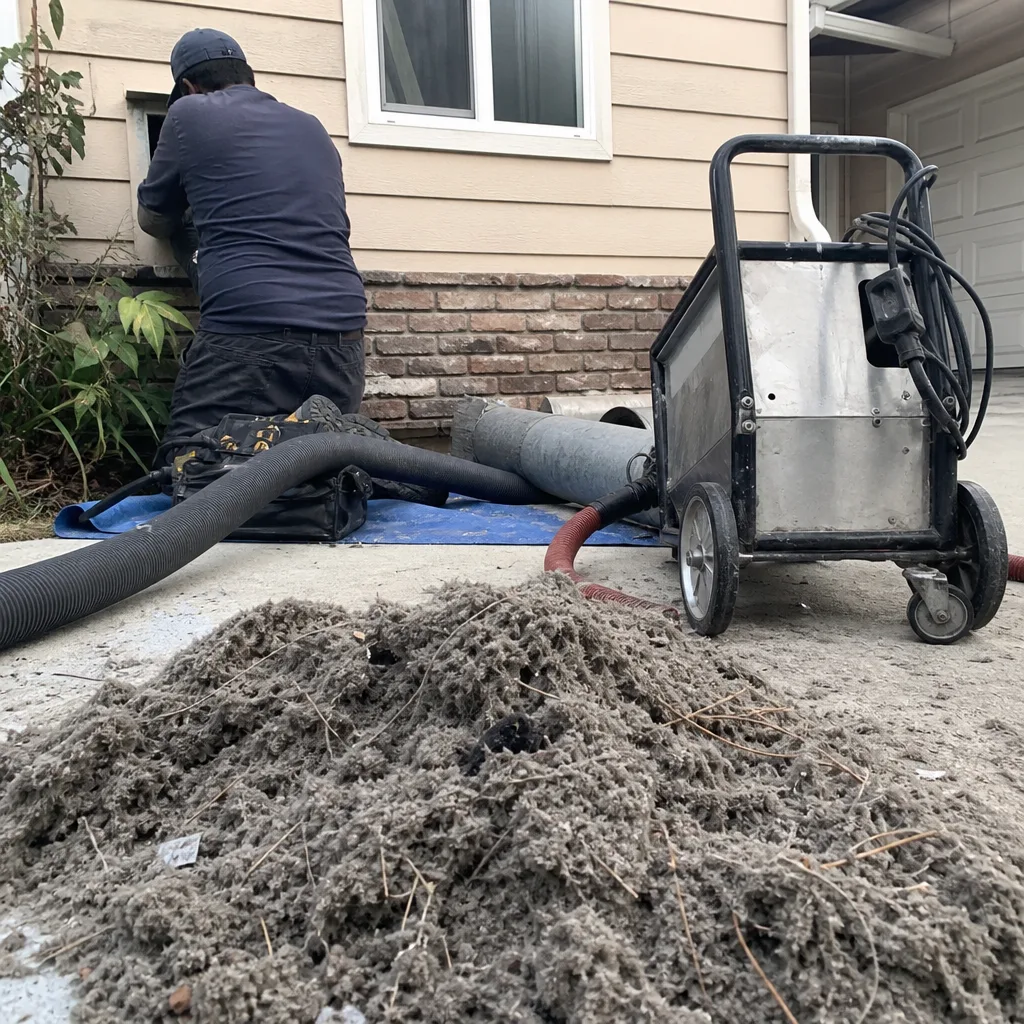 Before
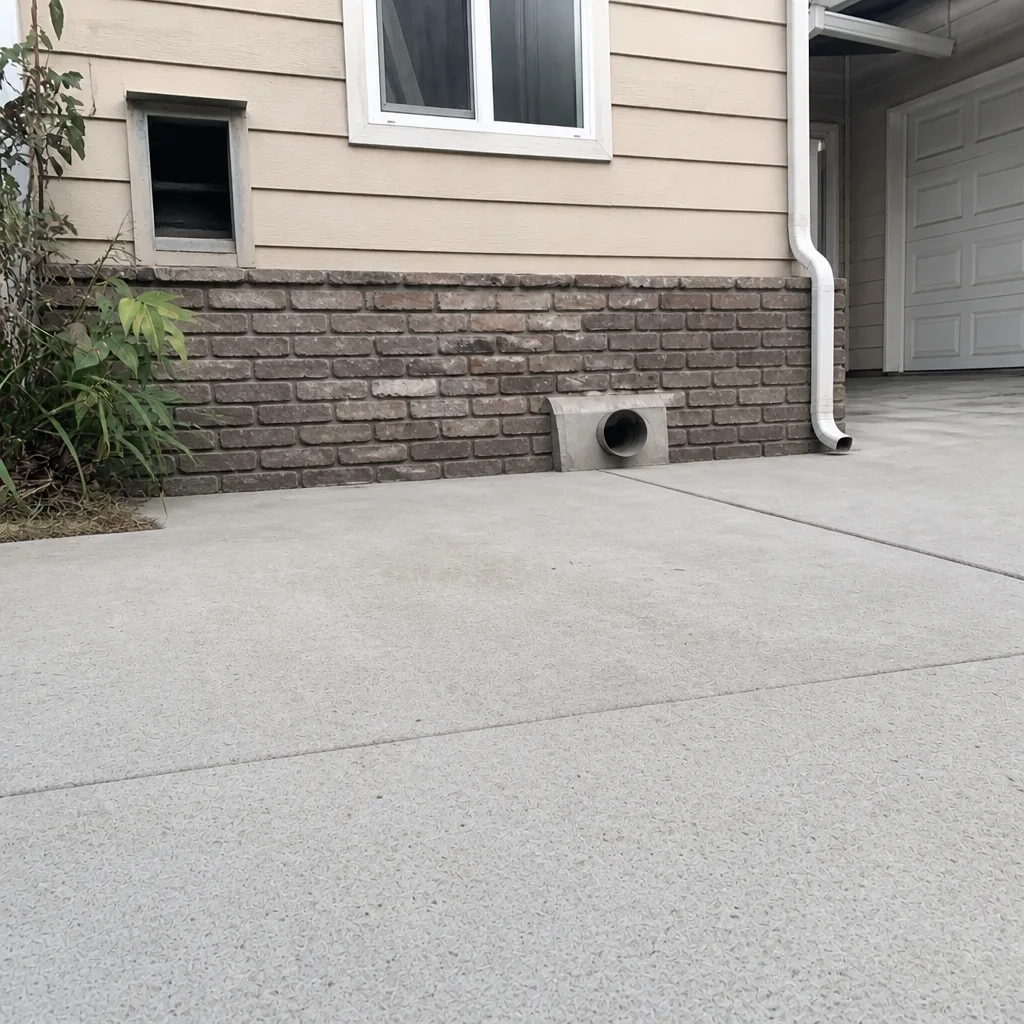 After
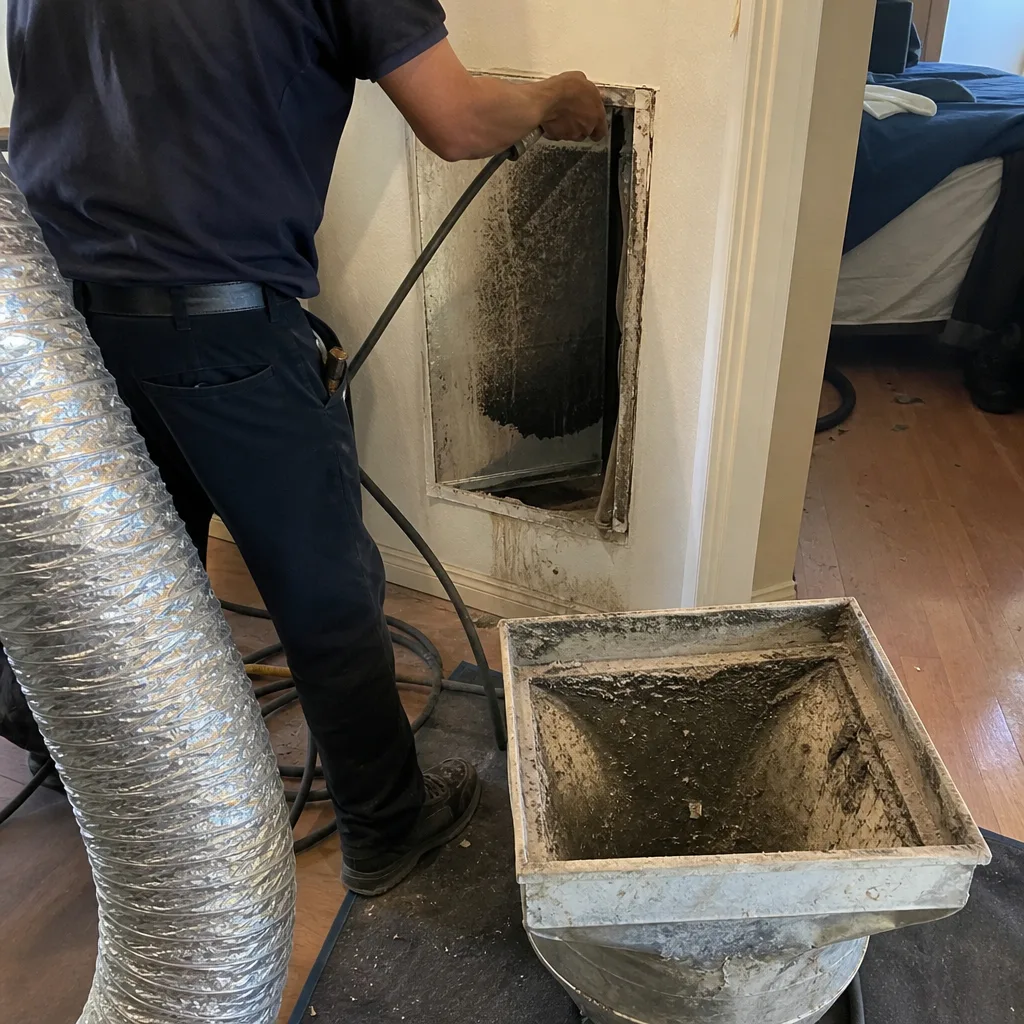 Before
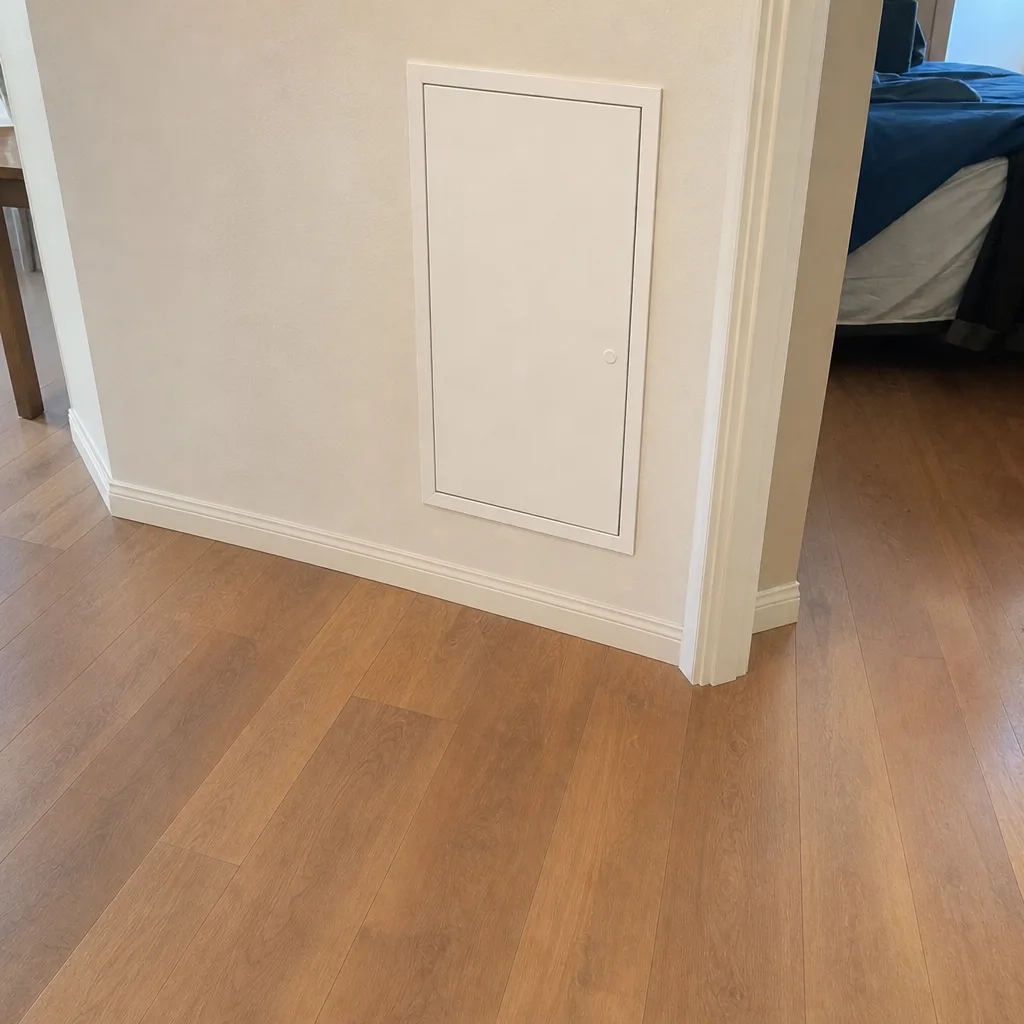 After
When to Call a Professional
Call a specialist the moment you see moisture, growth, or heavy debris anywhere inside the ductwork or air handler, or if the boot inspection you’re doing monthly starts showing a fuzzy layer instead of a light film. Loose or crushed ductwork, persistent smoky or musty odor after a filter change, and any post-renovation or post-pest activity on the inside of the system are all signals to bring in professional equipment. If you’re simply unsure whether what you’re seeing is normal, that’s a good reason to call too. Floral Park Air Duct Cleaning offers free estimates in Floral Park. Give us a call at (833) 966-4423, and we’ll tell you honestly whether your system needs a cleaning, a repair, or just a better filter schedule. We clean the whole air pathway, not just the registers, and we repair what we find so cleaned ducts stay clean.
Frequently Asked Questions
There’s no single interval that fits every home. In Floral Park, we recommend deciding by condition rather than a fixed date: a filter and drain pan that stay clean and no event triggers may go longer between cleanings, while a home with pets, heavy landscaping, recent renovation, or pest activity should plan for professional service sooner. A visual boot inspection done monthly is the honest indicator.
Yes, at the register level. Removing the grille and looking into the boot with a flashlight tells you a lot about accumulation, moisture, and leaks, as long as you don’t unscrew the boot or reach inside the duct. Anything at the air handler or coil is a professional matter.
Cleaning removes the debris that’s already there but doesn’t fix the reasons it got there: under-filtered return air, moisture in the air handler, and unsealed duct joints. When those conditions remain, a cleaned system can collect significant debris again within about 90 days.
Often, yes, especially if the HVAC system ran during dust-producing work. Drywall dust and insulation fiber settle into the return side, and fine dust doesn’t clear on its own. Change the filter the day the dust work stops, then have the system inspected.
Cleaning removes accumulated debris from the ducts. Repair and sealing fix the physical leaks, crushed runs, and detached joints that let contaminated air into the system. Cleaning a leaky system just refills it, so the two need to work together.
Yes. A wet or slimy drain pan and a dirty cooling coil sit directly in the air path, and the blower pushes whatever’s growing there straight into your cleaned ducts. It’s one of the most common reasons a system re-contaminates quickly.
We handle all of it: duct cleaning, dryer vent cleaning, HVAC cleaning, duct repair and sealing, and air-quality sanitizing. That single-specialist coverage means you don’t coordinate separate vendors, and we can recommend filtration upgrades from Honeywell and Aprilaire that keep air quality steady between visits. Call (833) 966-4423 for a free estimate.
The Bottom Line
Duct maintenance in Floral Park isn’t a single service call; it’s a small set of repeat actions done on the right timing. Change the filter to match the Santa Ana wind season and smoke events rather than a fixed calendar. Inspect your supply and return boots monthly with a flashlight and don’t open anything beyond the grille. Keep the drain pan and coil condition in the picture, because it determines how fast cleaned ducts get contaminated again. Treat renovation, pest activity, and wildfire smoke as event triggers that short-circuit the calendar. And seal the ducts, not just clean them. For a proper inspection, call Floral Park Air Duct Cleaning at (833) 966-4423. The estimate is free.
Written by the team at Floral Park Air Duct Cleaning.