
Last updated November 25, 2026
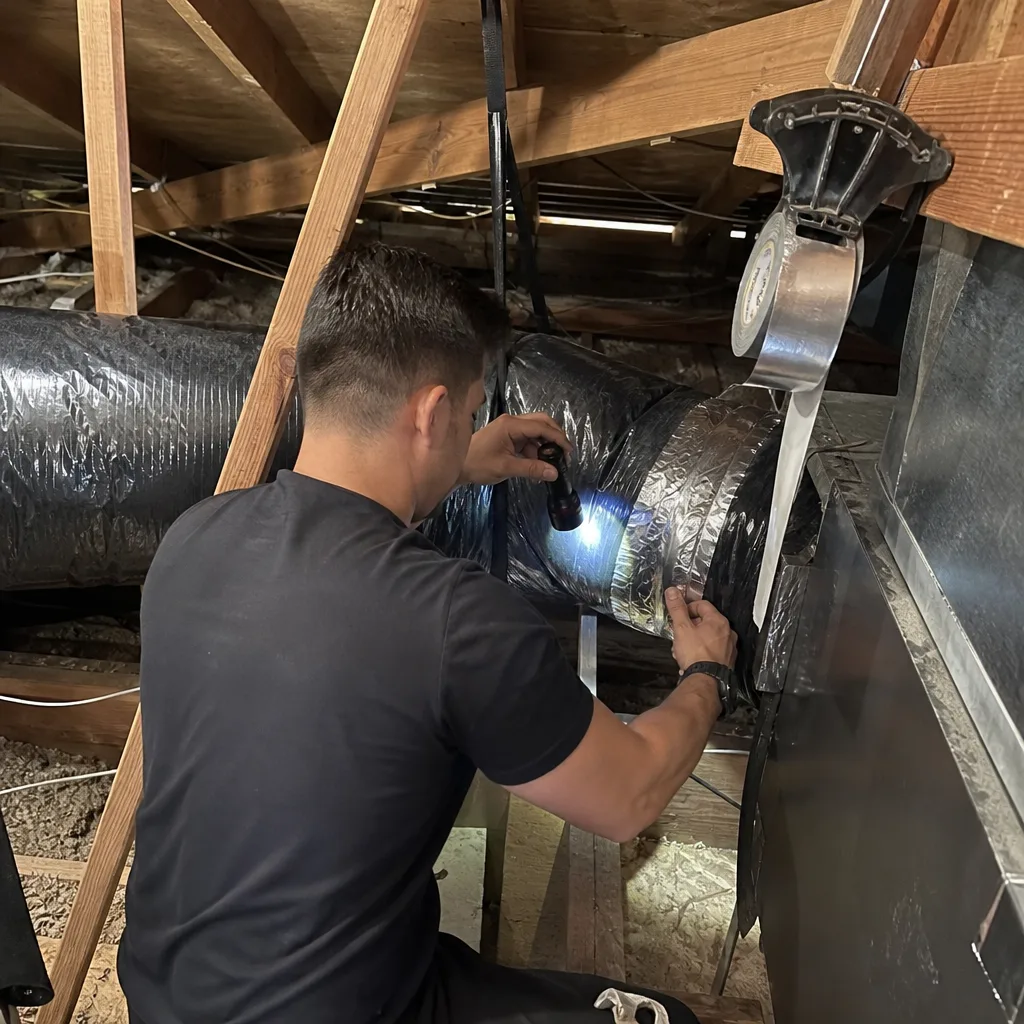
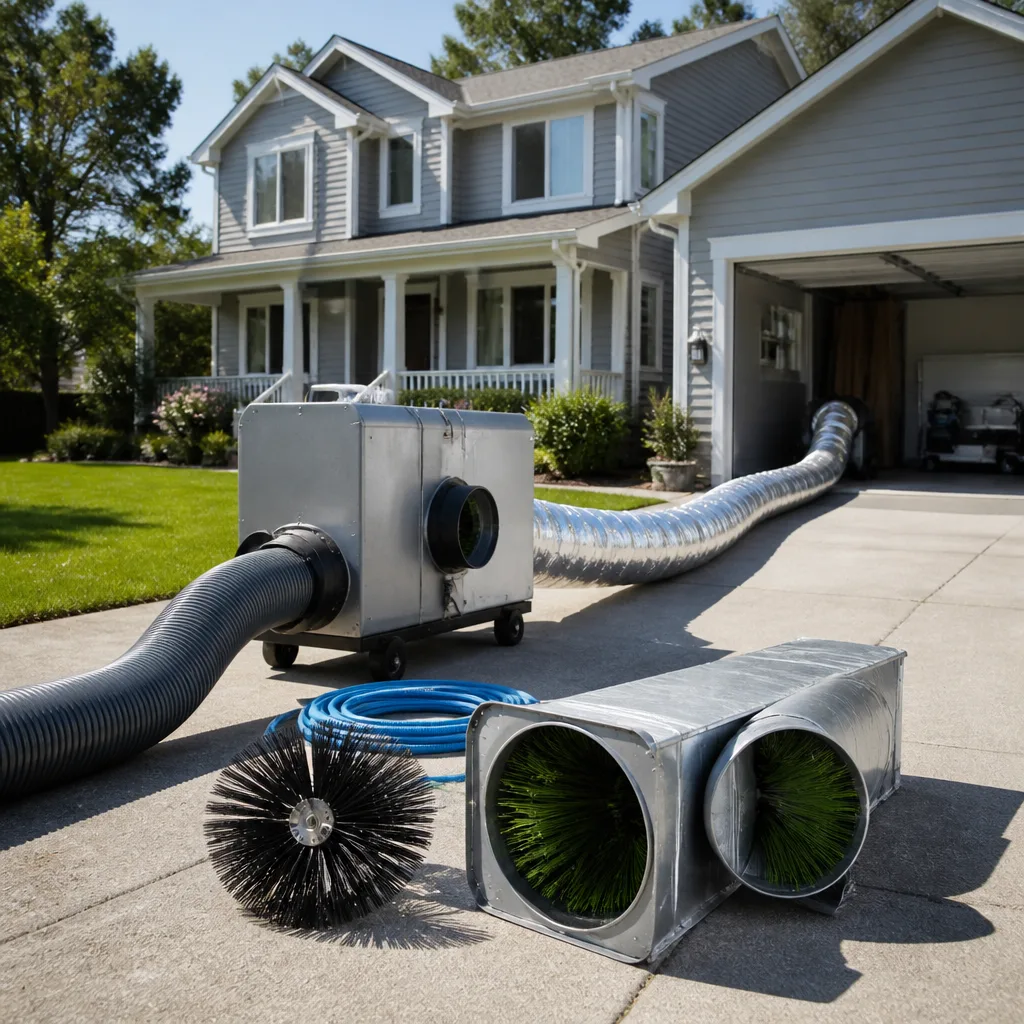 Whole-home duct cleaning
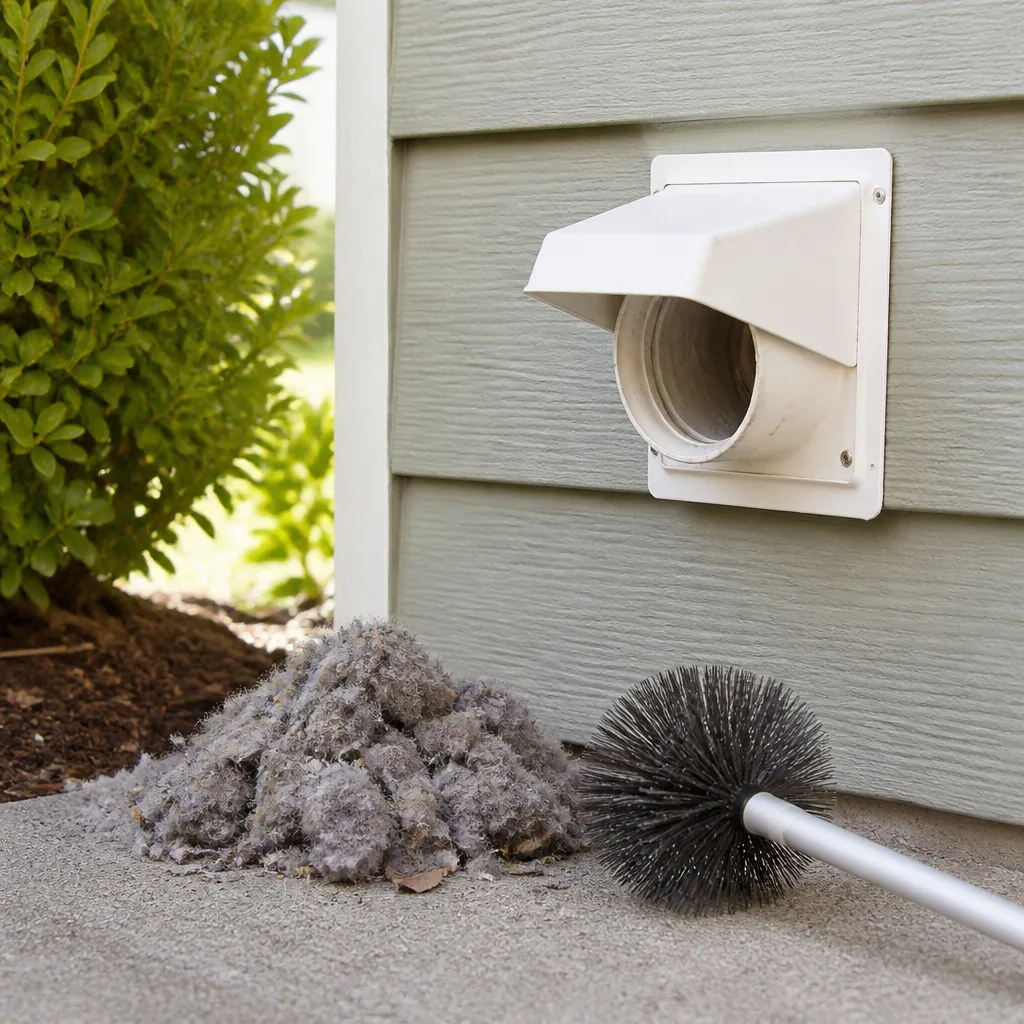 Dryer vent cleaning
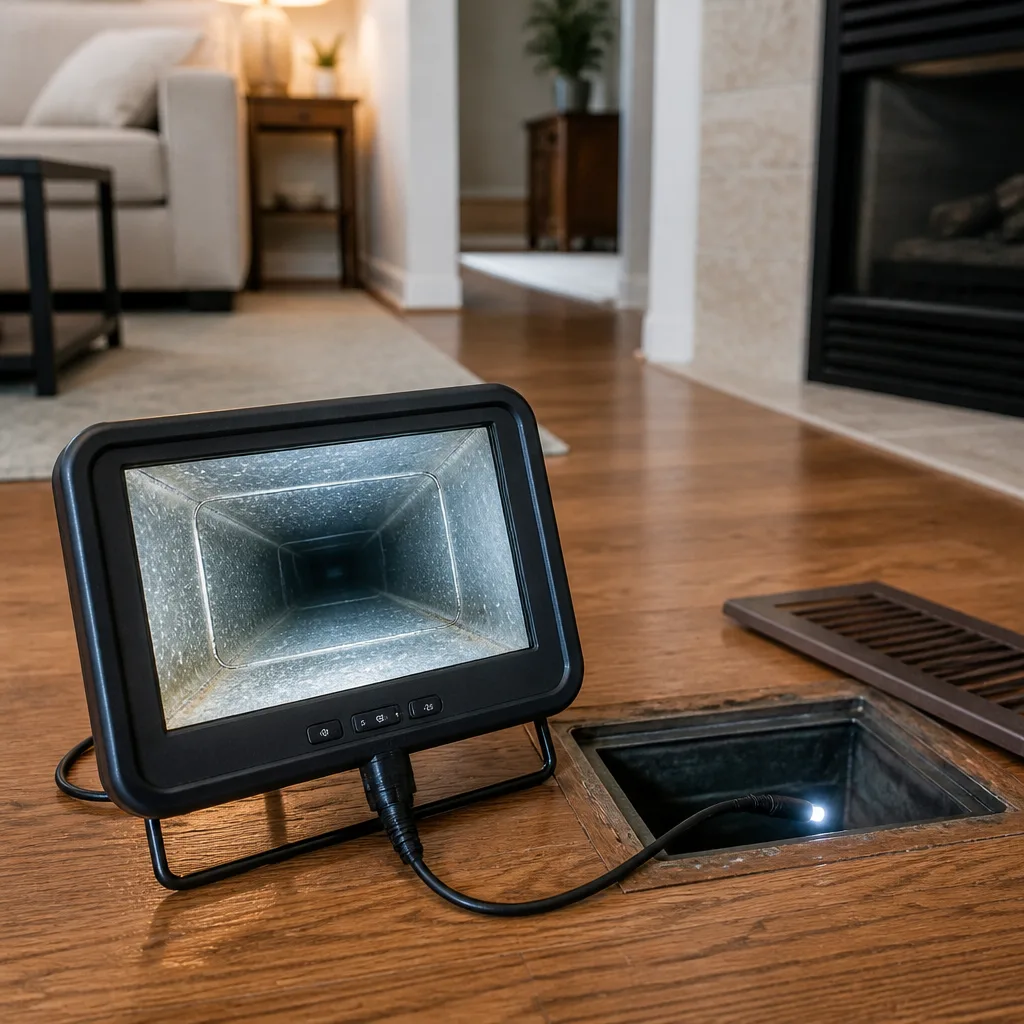 Camera inspection
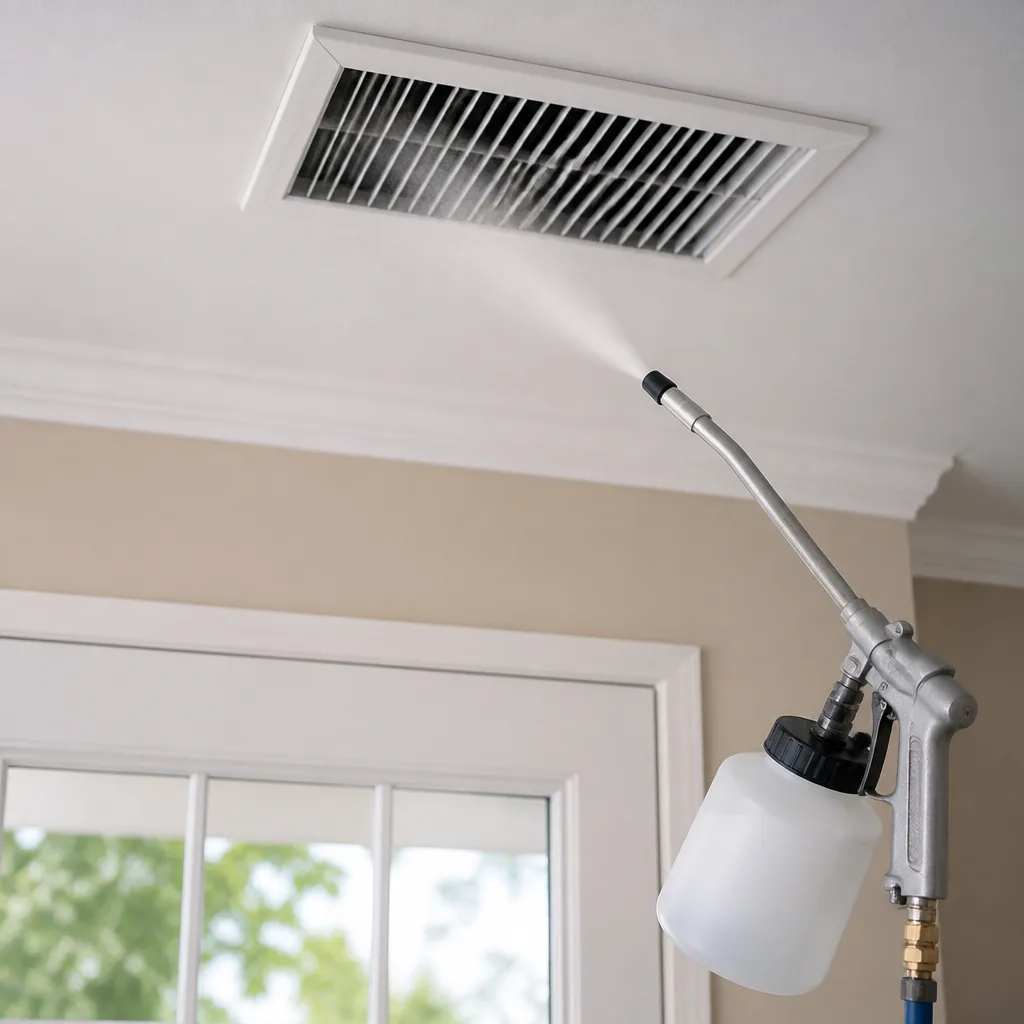 Sanitizing & deodorizing
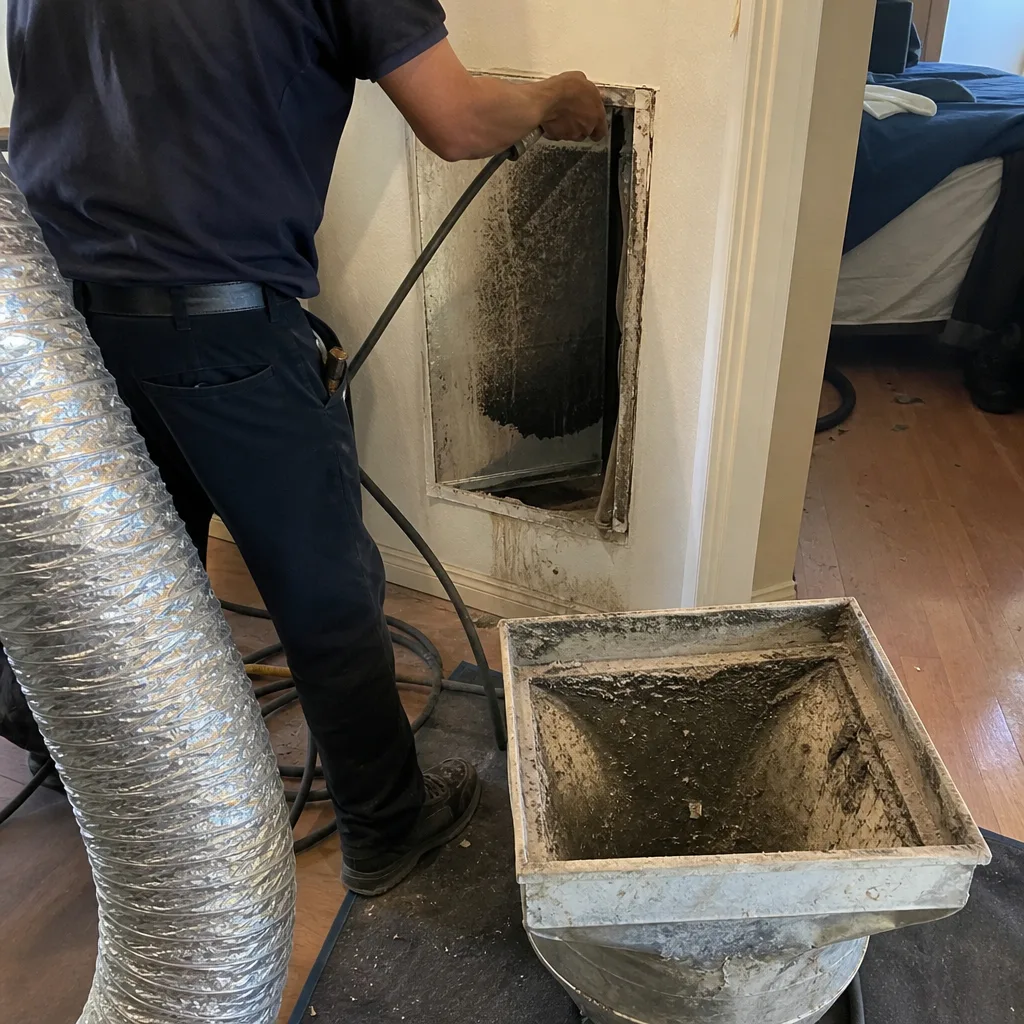
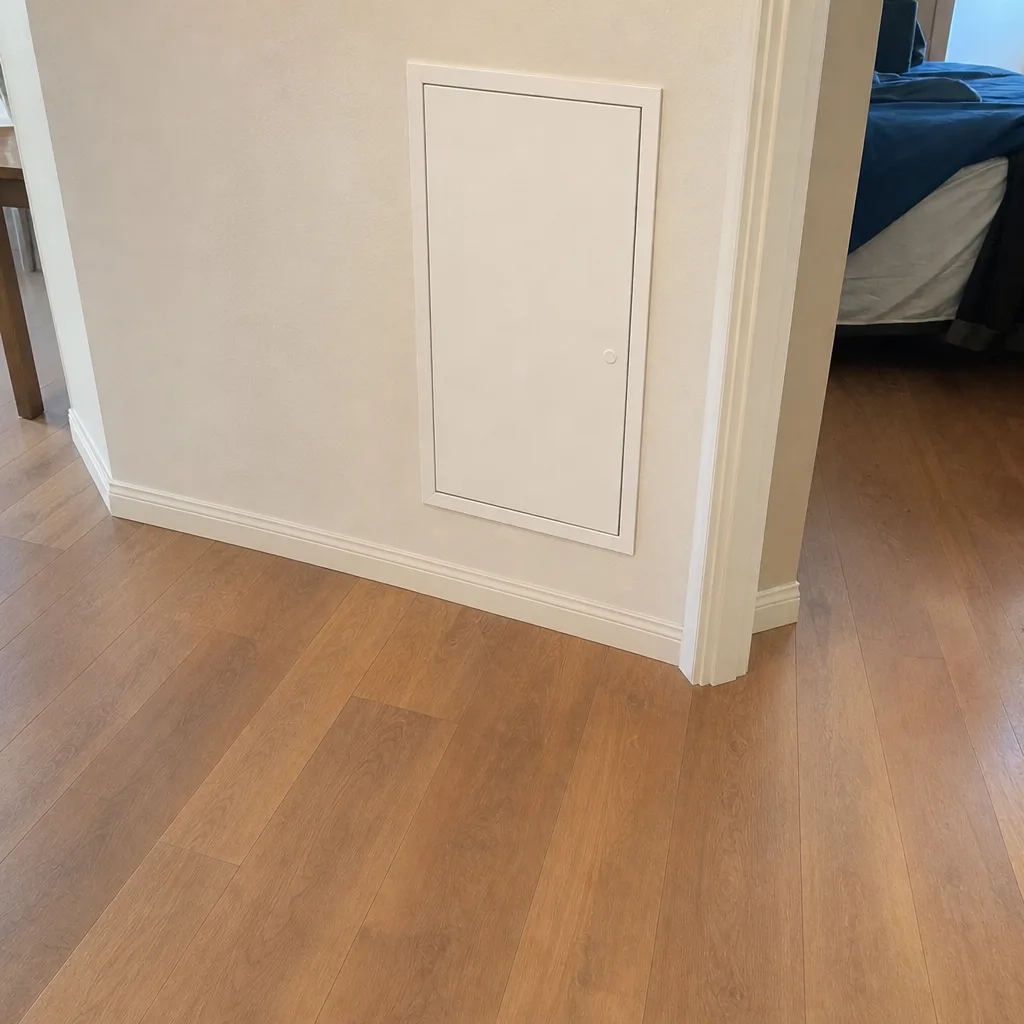
Whole-system duct and dryer vent check with before-and-after photos - you see exactly what came out of your vents
That "$99 whole-house special" is a bait ad - the real number appears once they are in your hallway, or the "clean" is a shop-vac at the register. We photograph the inside of your ducts before and after instead.
Air Duct Cleaning Warning Signs: A Floral Park Homeowner’s Reference Guide
Visible dust on your supply registers is a late-stage signal. By the time you can see it, the duct interior has usually been in a contaminated state for months, and what you’re seeing is only the portion that made it past the filter and settled on the grille. The warning signs that actually matter show up earlier and quieter: a room that heats slower than the rest of the house, a system that runs a few minutes longer each cycle, a filter that loads up faster than it should, or an odor that changes with the season. This guide is written for Floral Park homeowners who want to read those signals correctly before they hire anyone. We’ll walk through the mechanical and behavioral clues our technicians use to diagnose duct problems, and, just as importantly, how to tell a job that needs cleaning from one that needs repair and sealing first.
Quick Answer
The main warning signs that your air ducts need attention are uneven airflow between rooms, a filter that loads up faster than its rating suggests it should, musty or changing odors when the system runs, rising HVAC run times, visible dust streaking around registers, and rattling or whistling sounds in the duct runs. In Floral Park, where mild winters mean the system runs year-round on both heating and cooling, several of these signs together usually point to either debris accumulation or a leak that needs sealing before cleaning. A professional inspection tells you which one you’re dealing with.
Styles & brands we work with
- Whole-home duct cleaning
- Dryer vent cleaning
- Camera inspection
- Sanitizing & deodorizing
Table of Contents
- Why Dust on the Register Is the Last Sign You’ll See
- Airflow Asymmetry: The Room-by-Room Test
- Tracking HVAC Run Time Without Any Tools
- Reading Odor Patterns: Biological Growth, Rodents, or Ordinary Debris
- Filter Loading Rate as a Diagnostic Tool
- Sounds and Static Pressure: What Your Ducts Are Telling You
- Cleaning Signs vs. Repair-and-Sealing Signs
- What Makes Floral Park Ductwork Distinct
Why Dust on the Register Is the Last Sign You’ll See
A supply register sits at the end of the air pathway. Air travels from the return, through the filter, across the blower and heat exchanger or evaporator coil, and then down the length of the duct run before it ever reaches that grille. Dust that collects on the register has already passed the filter, traveled the full duct, and dropped out of the airstream at the point of lowest velocity. That’s a lot of distance to cover. Which means the buildup inside the duct behind it has been accumulating for a long stretch of time before the first visible speck appears at the vent.
We mention this first because it reframes the whole checklist. Homeowners in Floral Park tend to call when something is visible. The more useful habit is to notice the things that happen before anything is visible:
- Air velocity at the register. Hold a tissue or a strip of light paper near a supply vent. It should pull steadily and strongly. A weak, fluttering pull in one room while others are strong is a signal worth writing down.
- Temperature at the register. In cooling season, supply air should feel distinctly cold. In heating season, distinctly warm. A vent that blows air that’s only slightly conditioned suggests a leak or a restriction upstream.
- Streaking on the grille face. Dark streaks radiating from the slots mean the vent is pulling air through a dirty pathway. Clean vents that streak again within a few weeks are telling you something different than vents that took years to streak.
- Dust on horizontal surfaces near the vents. A fine, even film on furniture and shelves directly below supply registers is a heavier signal than dust on the register itself.
None of these signs on their own confirms a duct problem. But when two or three of them appear in the same part of the house, in a Floral Park home with the original duct layout intact, we start looking at the duct interior as the likely source rather than the visible surfaces as the problem.
Airflow Asymmetry: The Room-by-Room Test
Airflow asymmetry is the single most reliable early indicator of a partial blockage or a disconnected duct section. When one room gets noticeably weaker airflow than the rest, or when one room consistently runs a couple of degrees off from the thermostat setting, the duct serving that room is restricted somewhere upstream of the register. That restriction can be a nest of accumulated debris, a collapsed flex run, a section that pulled loose at a fitting, or a damper that’s partially closed. Each of those has a different fix, and only one of them is cleaning.
The test itself is simple and needs no equipment:
- Turn the system to fan-only so it runs continuously without heating or cooling.
- Go room to room and hold your hand or a tissue at each supply register. Note whether the pull is strong, moderate, weak, or absent.
- Feel the air temperature at each register, then compare it to the room you know is working well.
- Write down the results on a sketch of your floor plan. Patterns matter more than single weak spots.
- Repeat the test every few weeks through a season, on a day with similar outdoor conditions each time.
What you’re looking for is consistency. A room that’s always weakest is a room with a duct issue. A room that’s weak only on some days is more likely a damper or balancing problem. And a room whose airflow dropped over a period of weeks or months is the classic signature of progressive blockage: debris accumulating, a section starting to separate, or a flex duct sagging and closing off.
In Floral Park, where the housing stock spans several decades of construction and several styles of duct installation, we regularly see airflow issues tied to retrofitted additions and converted spaces. The room that was added on later often has the longest duct run and the fewest transitions, and it’s the first to show a weak register. That’s not a coincidence; it’s a design fact you can use.
Tracking HVAC Run Time Without Any Tools
HVAC run time is the closest thing you have to a diagnostic reading on your own system, and you can track it with nothing more than a clock and a note pad. A restricted duct system moves less air per cycle than a clean one, so the equipment has to run longer to satisfy the thermostat. Over a season, that extra run time is a measurable proxy for duct restriction. This is one of the pieces of information we ask for when a Floral Park homeowner calls, because the direction of travel tells us a lot before we ever open a panel.
Here’s how to track it well:
- Pick a thermostat setting and hold it for a full week so the system cycles on the same target each time.
- On a day with moderate outdoor conditions (avoid the hottest and coolest weeks of the year for the first reading), note the time when the system turns on and when it turns off during one full comfortable cycle. Write both numbers down.
- Do this for three or four cycles across two or three different days. Average them loosely. You don’t need precision, just a baseline.
- Repeat the same exercise a month later under similar conditions.
- Note any upward trend. A cycle that took fourteen minutes in spring and eighteen minutes in late summer under the same thermostat setting is a data point worth acting on.
What the trend tells us: if run time is climbing and airflow feels weak throughout the house, the restriction is usually in the return pathway or the main trunk. If run time is climbing but airflow feels strong at the registers, the restriction is more likely at the coil or the filter. If run time is climbing and only one zone of the house feels off, you’re looking at a local duct problem.
We’ll be honest about what run time can’t tell you. Outdoor temperature, humidity, thermostat programming, equipment condition, and filter condition all affect run time independently. That’s why we treat the trend, not a single reading, as the signal. For Floral Park homes, where the mild winter means the system never really stops working all year, the trend line over several months is the most useful reading a homeowner can bring to an inspection.
Reading Odor Patterns: Biological Growth, Rodents, or Ordinary Debris
Odor is diagnostic in a way that dust is not, because different underlying problems produce characteristically different smells. Learning to distinguish three common patterns will tell you more about what’s inside your ducts than any visual inspection of the vents. This is one of the areas where our experience with professional-grade Abatement Technologies contamination-control equipment comes into play, because odors that suggest biological growth are handled differently from odors that suggest animal activity.
- Musty, damp, or cardboard-like smell. This pattern usually points to biological growth somewhere in the air pathway, often on the evaporator coil, in the drain pan, or on damp insulation lining a duct section. It tends to be strongest in cooling season and fades in heating season.
- Sharp, ammonia-like, or urine smell. This pattern is the more common signature of rodent or animal activity in the ducts or the space around them. It tends to be stronger in the morning or after the system has been off for a while, then fades once air is moving.
- Dusty, stale, or “old house” smell. This is the ordinary debris-accumulation pattern. It’s usually strongest at the start of a season when the system comes back on after a period of rest, and it fades as air moves again.
- Chemical or burnt smell. Not a cleaning signal. A chemical or burning smell is a sign to turn the system off and call a qualified technician for inspection before running the equipment again.
Timing is the second layer of evidence. Odors that appear within a few minutes of the system starting and fade after a while suggest something on the coil or in the plenum, where the air first passes. Odors that build up over an hour or more of run time suggest something deposited deeper in the duct runs. Odors that appear only in one room tell you where to look.
For homeowners in Floral Park who notice a musty smell that shows up every cooling season and disappears in winter, the pattern itself is informative: the moisture source is probably the cooling side of the system, and cleaning the ducts alone without addressing the coil or the drain would likely not resolve it. That’s why we pair cleaning with sanitizing as a separate service line, and why we look at the whole air pathway rather than the visible registers.
Filter Loading Rate as a Diagnostic Tool
How fast your filter loads up is a genuine diagnostic, and it’s the tool most homeowners don’t know they have. A filter is rated by MERV, which tells you what particle size it’s designed to catch, not how often it should be replaced. The right replacement frequency depends on how much particulate the return is pulling in and how much bypass is happening around the filter frame. Reading the loading rate against the MERV rating tells you whether the system is getting the filtration you paid for.
The general pattern to look for:
- A filter that loads up faster than its MERV rating suggests it should. This is the most common letter-homeowners-miss. A MERV 8 filter that used to last a season but now looks dark at six weeks is pulling more particulate than it should, which points to a source of contamination upstream, often in the return ducts or at gaps in the return plenum where unfiltered air gets pulled in.
- A high-MERV filter that loads up very slowly. Sometimes a sign that air is bypassing the filter entirely through a gap in the housing or a misfit frame. Bypass is worse than a lower-MERV filter that fits properly, because it lets unfiltered air straight through.
- A filter that collapses or bows inward. Restriction on the return side. The blower is pulling harder than the return pathway can supply. Get this looked at.
- A filter that shows one side darkened and the other side still clean. Usually means the filter isn’t seated properly, or that airflow is favoring one part of the filter face because the return plenum is directing air unevenly.
If you want to keep a record that actually helps a technician diagnose your system, note the date each filter is installed and the date it visually loads up. It’s one column more than most homeowners track, and it turns a routine chore into a data point. Honeywell and Aprilaire filter cabinets and media filters, which we work with often, make that tracking easier because the loading pattern is visible without pulling the whole assembly apart. When we recommend a filtration upgrade to a Floral Park homeowner, one of the questions we’re answering is: what size and MERV rating will work with the duct system you have, so the filter actually protects the equipment and the air rather than just sitting in the cabinet?
Sounds and Static Pressure: What Your Ducts Are Telling You
A healthy duct system runs quietly. A duct system under restriction or with a separation doesn’t, and the sounds break down into recognizable categories. Listening is free, and it’s one of the fastest triage tools for figuring out whether a Floral Park home needs a cleaning, a repair, or both.
- Whistling at a register. Air moving through a partially blocked or undersized opening. Usually a sign of a local restriction.
- Rattling or flapping in the duct runs. Often a damper that’s come loose, a flex duct that’s sagging and catching the airstream, or a piece of tape or insulation that’s worked its way into the pathway.
- Popping or booming at startup and shutdown. Usually ductwork flexing under pressure change. Common in undersized return systems and in homes with rigid metal trunks that have never been sealed.
- A whooshing sound at the return grille. Normal to a point. Very loud whooshing means the return is starved for air, which is a duct sizing or blockage issue rather than a dirt issue.
- Humming or buzzing in the duct. Almost always electrical, not air. Turn the system off and have it looked at.
Static pressure is the professional version of what you’re listening for. Every duct system has a design pressure, and every filter, coil, and length of duct adds resistance that pushes against it. Our technicians measure static pressure at the equipment and at the registers, and the difference tells us where the restriction is even when the homeowner can’t feel it. That’s a diagnostic step a shop vac and a hose can’t perform, and it’s part of why professional-grade equipment matters on a job where a lot of the actual work is invisible.
If you’re hearing something but can’t tell which category it falls into, write down when it happens: at startup, all the time, only in one room, only in heating season, only in cooling season. That timing note is worth more than the sound description when you call.
Cleaning Signs vs. Repair-and-Sealing Signs
The distinction between a job that needs cleaning and a job that needs repair and sealing first is one our technicians make on almost every Floral Park inspection, and it’s the distinction that saves homeowners money. Cleaning a duct system that has a disconnected section or a major leak means cleaning the parts and blowing the rest back into the house. That’s why we pair cleaning with repair and sealing as service lines under the same specialist team: addressing the whole air pathway means fixing what’s broken, not just moving dirt around.
Signs that point to cleaning
- Airflow feels even throughout the house but slightly weak everywhere.
- A dusty, stale, or “old house” smell that appears at season startup and fades during the season.
- Filter loading rate is consistent month to month, and the filter is loading from uniform contamination rather than a localized stain.
- Visible fine dust settling near supply registers, particularly after the system has run several hours.
- No unusual sounds and no significant room-to-room temperature differences.
Signs that point to repair or sealing first
- One or two rooms consistently weaker than the rest, particularly rooms on the far end of the run.
- Popping, booming, or whooshing noises that suggest the duct is under pressure it wasn’t designed for.
- Visible seams, tape pulling away, or gaps where ducts pass through unconditioned space.
- Filter loading faster than its MERV rating suggests it should, especially if the filter stains unevenly.
- A musty smell that returns quickly after a previous cleaning, which suggests a moisture source still feeding biological growth.
In many cases, the answer is a bit of both: a localized repair on one run, sealing on the trunk, and cleaning through the whole system once the pathway is whole again. That’s why we recommend opening up the system and looking before quoting. A quote given without looking at the ductwork is a quote given on assumed conditions, and it’s exactly the sort of bait-and-switch that has made homeowners in Floral Park, and everywhere else, wary of the lower-priced tier of this industry.
What Makes Floral Park Ductwork Distinct
Local conditions shape how duct problems develop, and Floral Park has its own pattern. The mild climate here means the HVAC system runs through the entire calendar year, alternating heating and cooling rather than taking a long seasonal rest. Ducts don’t get the recovery period they’d get in a colder climate, and small contamination issues have more run hours to accumulate. That makes the early signals in this guide more valuable, not less; catching a dirty system in a place where the system works every month is easier than catching it where the system sits idle for half the year.
The housing mix in Floral Park matters too. Homes built across several decades carry several different duct layouts, from older rigid metal trunks to retrofitted flex runs serving additions and converted spaces. The uniformity of the neighborhood architecture can hide a wide variety of what’s actually inside the walls. When a homeowner tells us one room is always a little off, we ask about the age and layout of that section of the house, because a converted space added onto a mature Floral Park home often has the ductwork that has the most to explain.
One thing that’s consistent regardless of house style: the level of dust and debris that accumulates indoors is driven by indoor conditions more than outdoor ones. Pet dander, cooking aerosol, and ordinary household dust all pass through the return and either get caught by the filter or deposit in the pathway. In Floral Park homes with pets, allergy sufferers, or young children, we tend to recommend shorter inspection intervals because the loading rate on the filter will tell us quickly whether the pathway is keeping up.
Common Mistakes to Avoid
- Waiting for visible dust before acting. Visible dust is the last sign, not the first. Waiting for it means you’re inspecting at the end of a cycle rather than the beginning of one. Track the quieter signals, especially run time and filter loading rate.
- Assuming one weak register means a whole-system problem. One weak register is a clue, not a diagnosis. Check the room-by-room pattern across a couple of weeks before drawing conclusions.
- Hiring on price alone. A low quote for “whole-house duct cleaning” that doesn’t specify equipment, doesn’t offer before-and-after photos of the job, and doesn’t include a written estimate is the classic bait-and-switch structure. Ask what equipment is being used and whether photos will be provided before work begins.
- Cleaning a system that needs sealing first. Cleaning a leaking or disconnected system pulls debris through the house rather than out of it. Get the pathway intact before getting it cleaned.
- Replacing the filter more often without reading the loading rate. A filter that’s loading fast is telling you something. Replacing it faster treats the symptom; identifying why it’s loading fast treats the problem.
- Ignoring the dryer vent. Dryer vent cleaning is a fire-safety service, not a comfort service, and the signs are similar to duct problems: longer dry times, a hot dryer cabinet, lint accumulation in the trap area. It’s worth checking as part of any inspection.
- Skipping the estimate in writing. A written, per-system price agreed before the work starts is your protection against the industry’s low-ball-then-upsell reputation. If a provider won’t put the price on paper before starting, that’s the clearest warning sign on this list.
See the difference
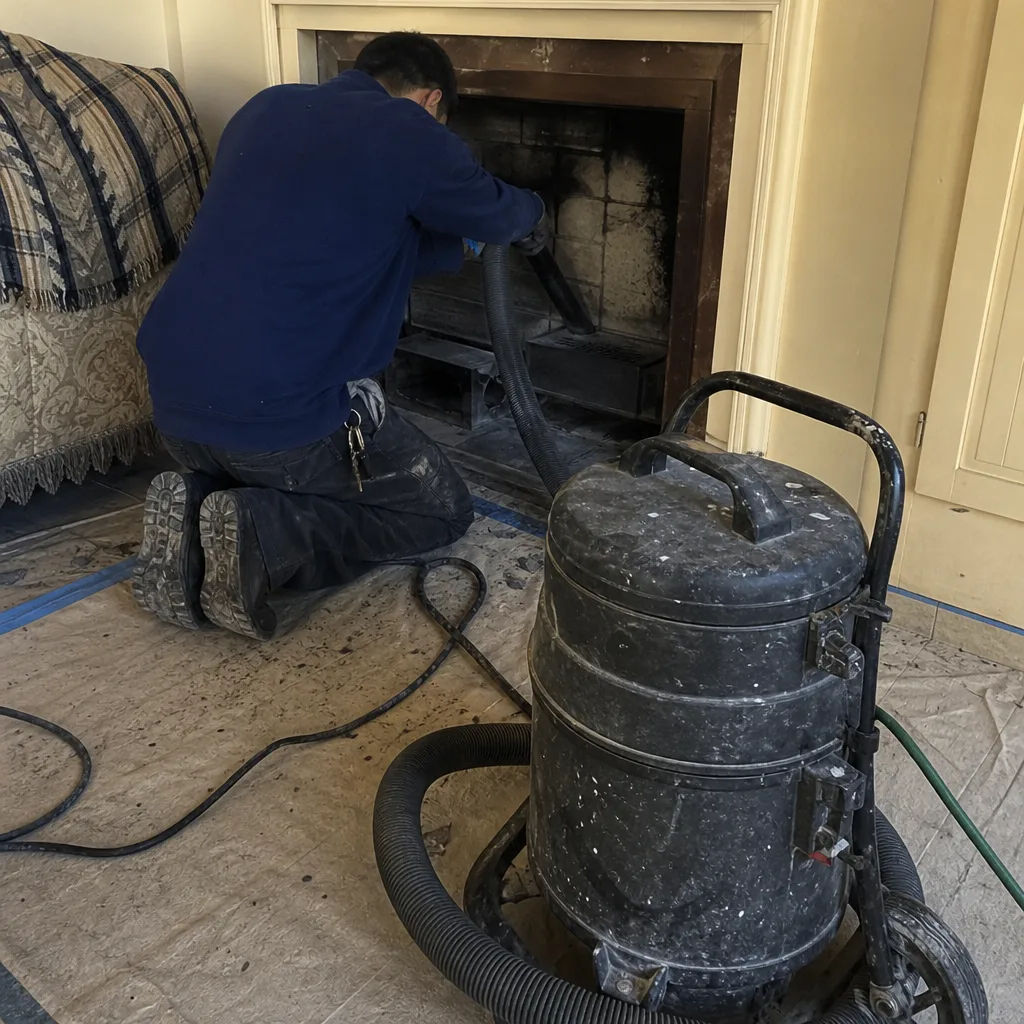 Before
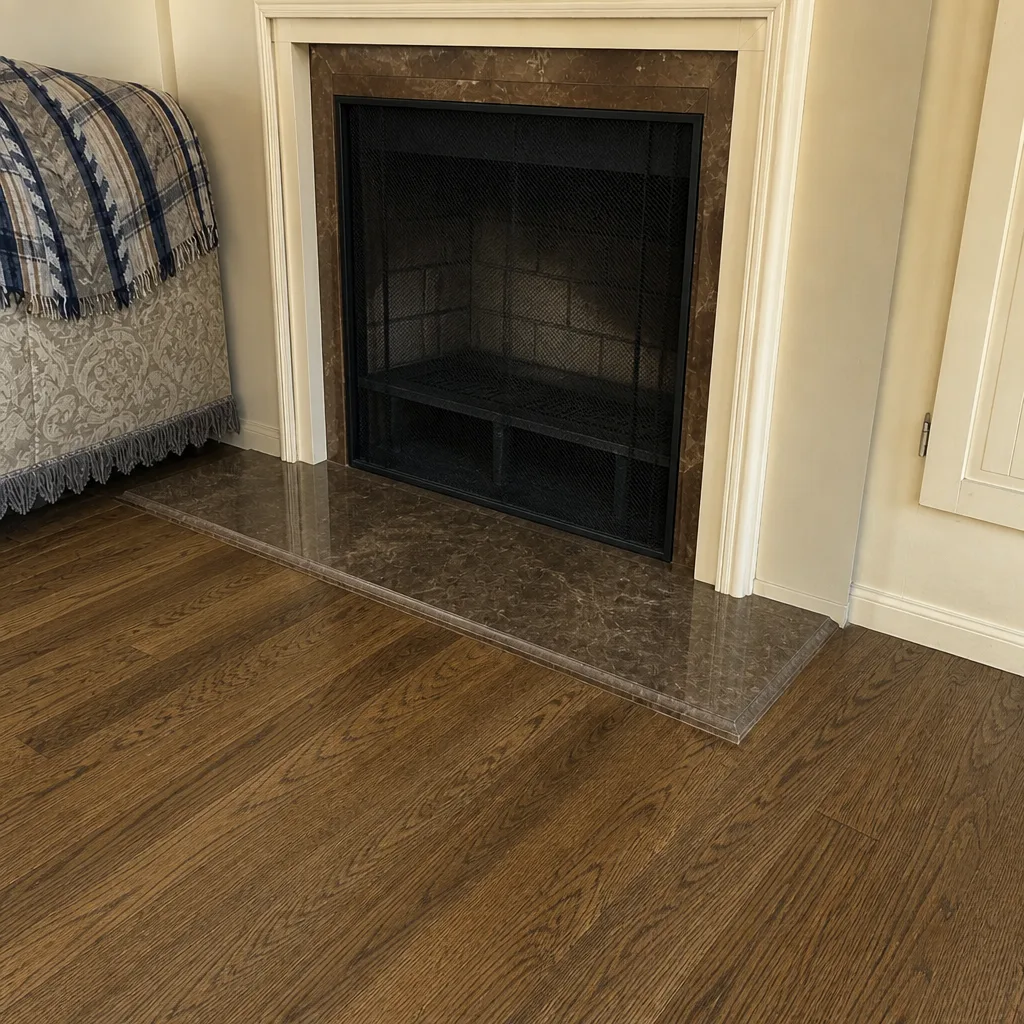 After
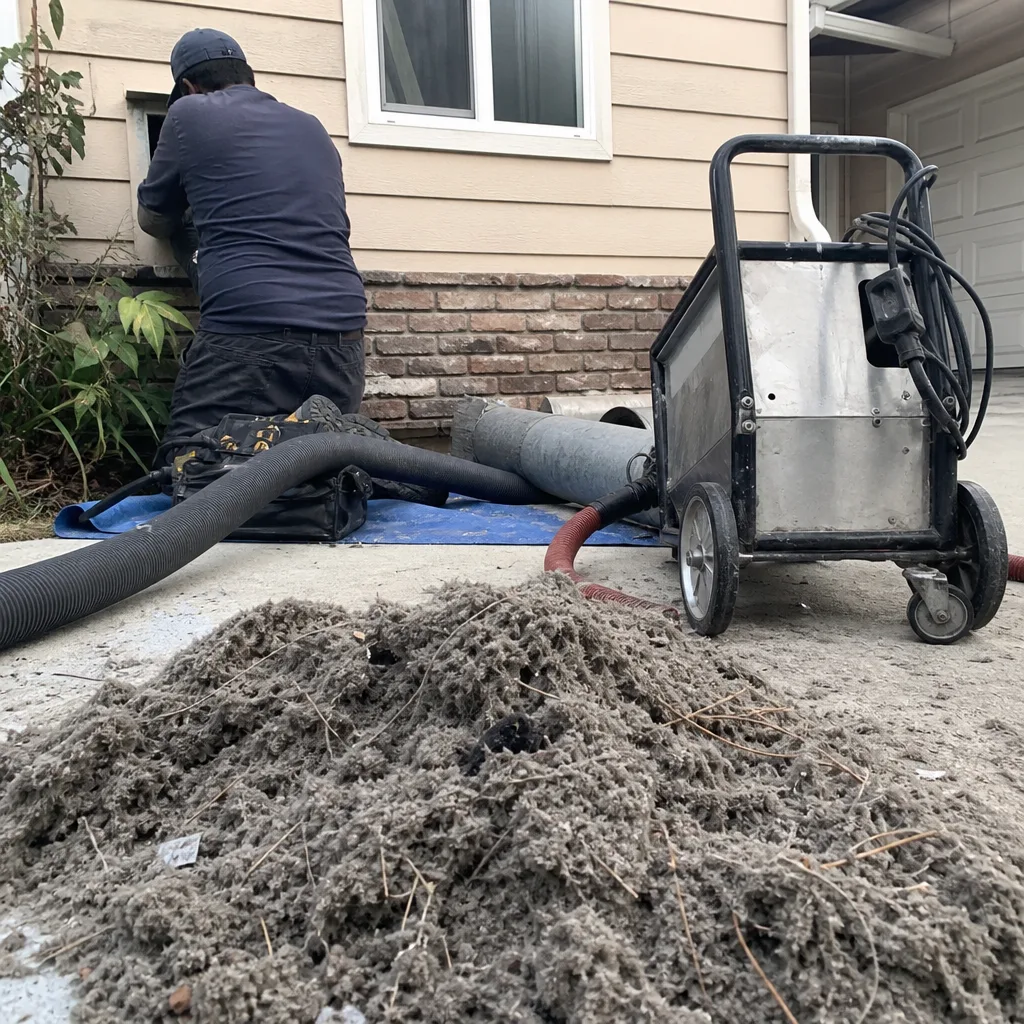 Before
 After
 Before
 After
When to Call a Professional
Call a professional when you’re seeing two or more of the mechanical signals in this guide together, when airflow asymmetry between rooms persists across several weeks, when an odor pattern matches one of the diagnostic categories we described, or when the filter loading rate is out of step with its MERV rating. Call sooner if you’re hearing popping, whistling, or flapping inside the ducts, or if you smell something sharp or chemical. Call before running the system again if the smell is chemical or burning. If a home has never had the ducts inspected, particularly a Floral Park home with a recent addition, a kitchen renovation, or a major filter change, an inspection is one of the higher-value maintenance items on the list.
Floral Park Air Duct Cleaning offers free estimates in Floral Park. Call (833) 966-4423. We answer 24/7. Fast dispatch from 7am to 7pm, Sunday through Friday. One flat price per system, agreed before work starts, with before-and-after photos of your own ducts.
Frequently Asked Questions
Most homes in Floral Park benefit from an inspection every two to three years, with cleaning performed when the inspection shows it’s needed rather than on a fixed calendar. The mild climate here means the HVAC system runs year-round, so the ducts accumulate contamination over more run hours than in colder regions. Homes with pets, allergy sufferers, or young children typically warrant shorter intervals; homes with no pets or occupants with no sensitivities can often stretch a bit longer. Reading the filter loading rate and HVAC run time trend between inspections is the practical way to decide. Call (833) 966-4423 for an exact quote. Estimates are free.
The cheapest quotes usually reflect a lower scope of work, not a better price: no inspection of the duct interior, no equipment capable of a real extraction, no photos of the work, and a per-vent price that balloons once a technician is on site. Professional-grade equipment matters here. When a system is cleaned with consumer-level tools, the visible registers end up cleaner while the duct interior remains contaminated, and the problem returns quickly. A written, per-system price agreed before work starts is the way to compare quotes honestly. Call (833) 966-4423 for an exact quote. Estimates are free.
Ask for before-and-after photos of your own ducts, not generic marketing images. A specialist who uses professional-grade equipment (rotary-brush and vacuum systems, contamination-control tools) will be comfortable showing you what came out of your system and what the ductwork looks like afterward. If a provider is unwilling to photograph the work or to put the scope of the job in writing before starting, that’s a warning sign independent of price. Call (833) 966-4423 for an exact quote. Estimates are free.
Air duct cleaning focuses on the ductwork itself: the trunks, branches, and registers that move air from the equipment to the rooms. HVAC cleaning addresses the equipment and the components attached to it, including the coil, the blower, and the drain pan. Many Floral Park jobs involve both because contamination often starts at the equipment and moves down the ducts, or vice versa. A professional inspection can tell you which you need, and we treat them as separate service lines with separate scopes for that reason. Call (833) 966-4423 for an exact quote. Estimates are free.
Cleaning can reduce a source of airborne particulate if the ducts and coil are contributing to it. It’s not a treatment for allergy symptoms, and we don’t present it that way. What we can do is look at the full air pathway, including the filter and any gaps or leaks in the duct system that let unfiltered air in, and recommend the combination of cleaning, sealing, and filtration (with products from Honeywell or Aprilaire, for example) that keeps particulate lower between service visits. If your ductwork is leaking and unfiltered air is bypassing the filter, cleaning alone won’t fix the underlying problem. Call (833) 966-4423 for an exact quote. Estimates are free.
It’s a different service line with a different purpose. Dryer vent cleaning is a fire-safety service: lint accumulation in the vent run restricts airflow through the dryer and is a well-understood contributor to dryer fires. Signs to watch for include longer dry times, a hot dryer cabinet, and lint accumulating outside the trap. It’s worth checking as part of any inspection, and it’s one of the five service lines we handle under one team so you’re not coordinating multiple vendors for a whole-house air-safety check. Call (833) 966-4423 for an exact quote. Estimates are free.
The Bottom Line
The warning signs that matter most are the quiet ones: uneven airflow between rooms, HVAC run time that creeps upward over a season, a filter that loads up faster than its MERV rating suggests it should, and odors that follow characteristic patterns for biological growth versus rodent activity versus ordinary debris. Visible dust is a signal, but it’s a late one. So is a low price quote with no written scope. In Floral Park’s mild climate, where the system runs year-round, those early signals show up reliably and are worth tracking as part of ordinary home maintenance. When two or more of them appear together, an inspection is the right next step, and a written estimate on a per-system basis with before-and-after photos is the standard a specialist should meet. For more on the individual services discussed here, see Floral Park Air Duct Cleaning, our air duct cleaning, our dryer vent cleaning, and our HVAC cleaning.
Contact us to schedule a free estimate. Call (833) 966-4423. We answer 24/7. Fast dispatch from 7am to 7pm, Sunday through Friday. Our technicians have up to 11 years of experience. One flat price per system, agreed before work starts, with before-and-after photos of your own ducts.
Written by the team at Floral Park Air Duct Cleaning.