
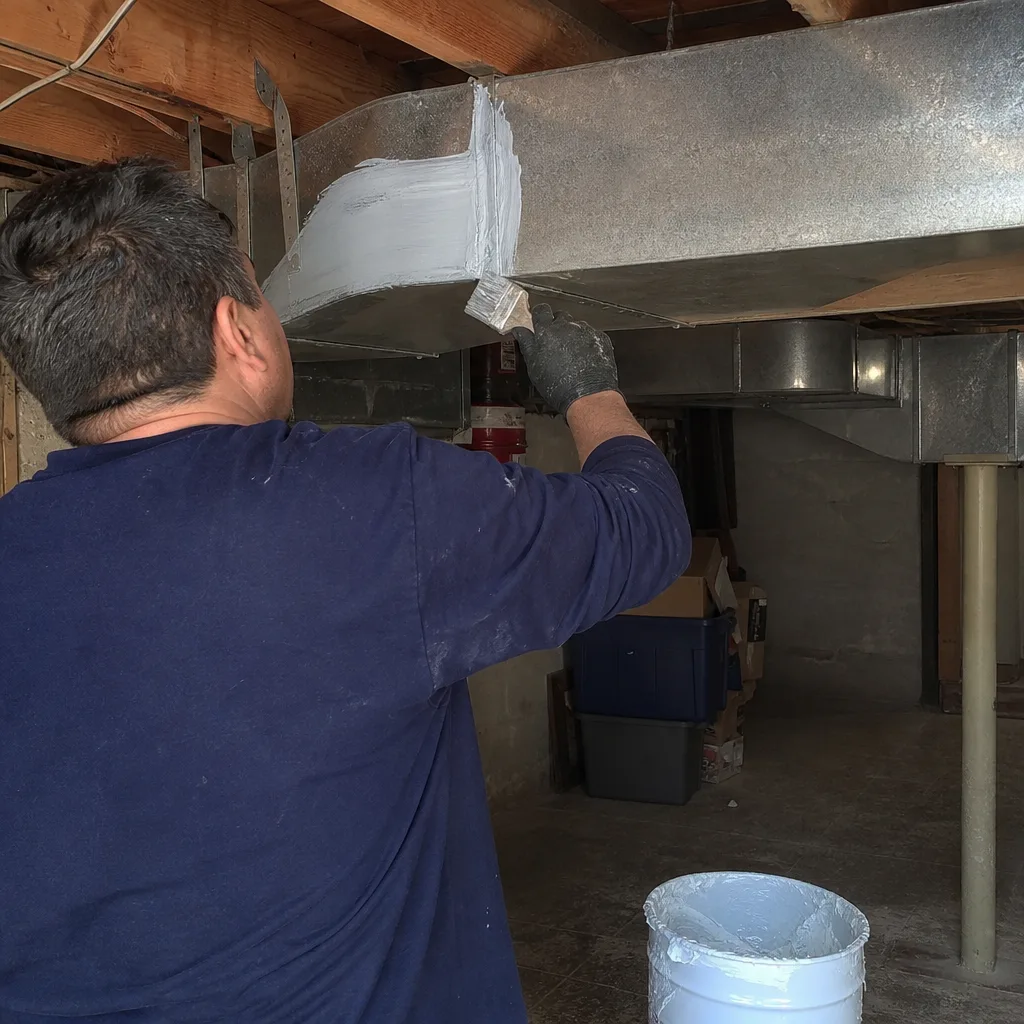
Last updated November 25, 2026
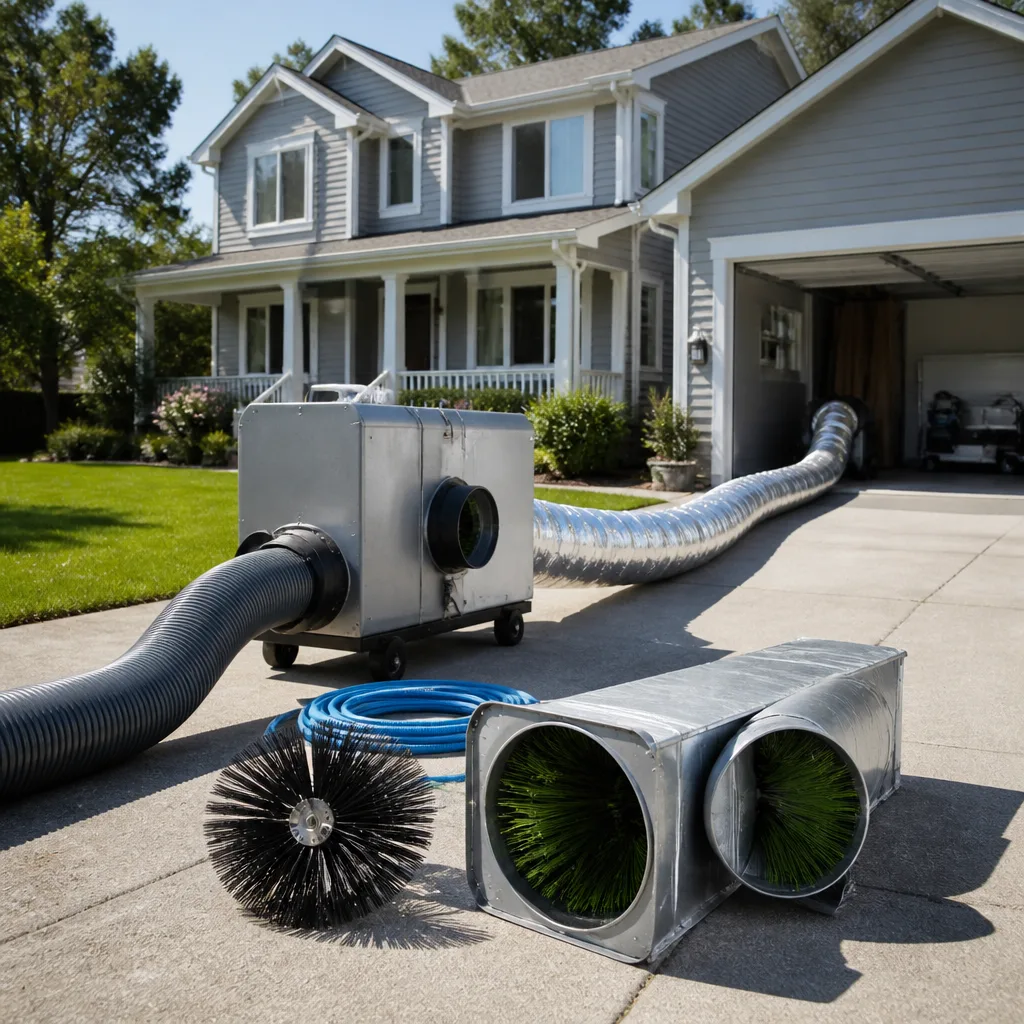 Whole-home duct cleaning
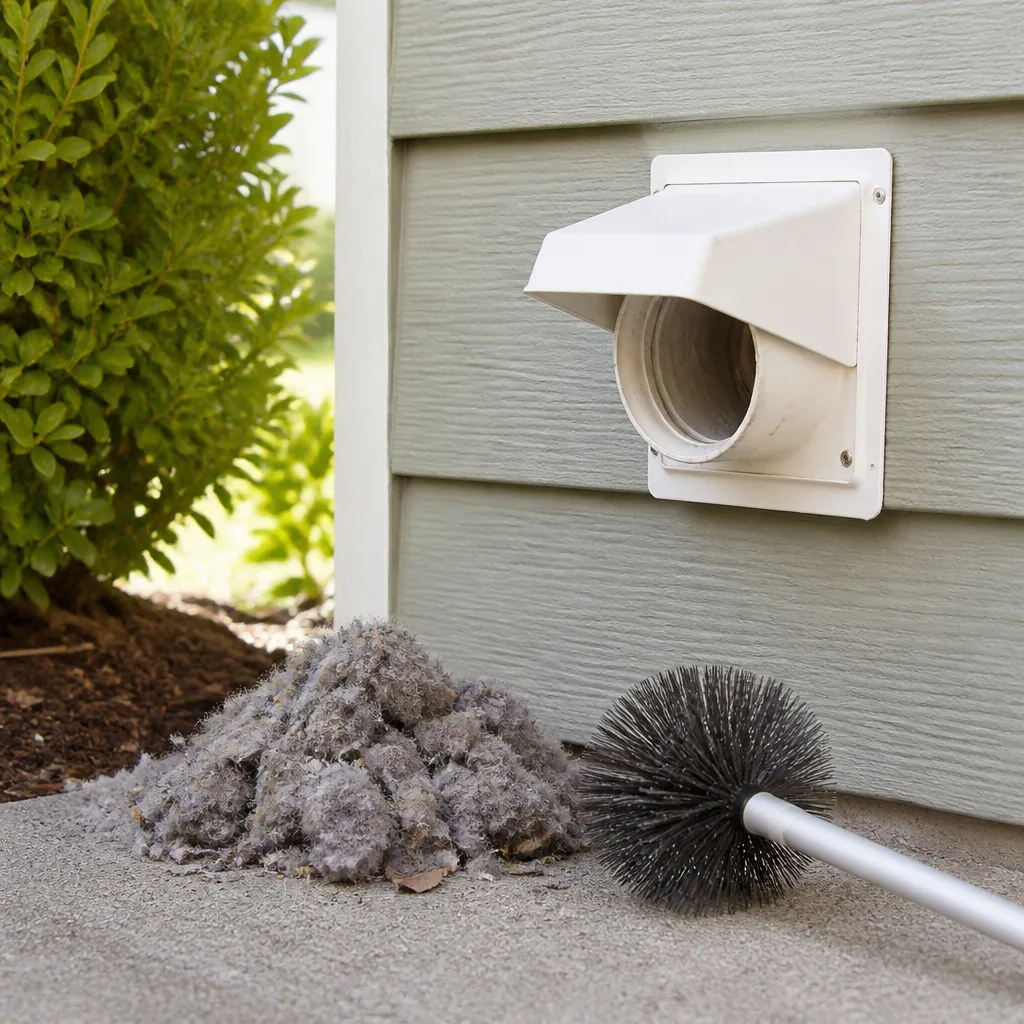 Dryer vent cleaning
 Camera inspection
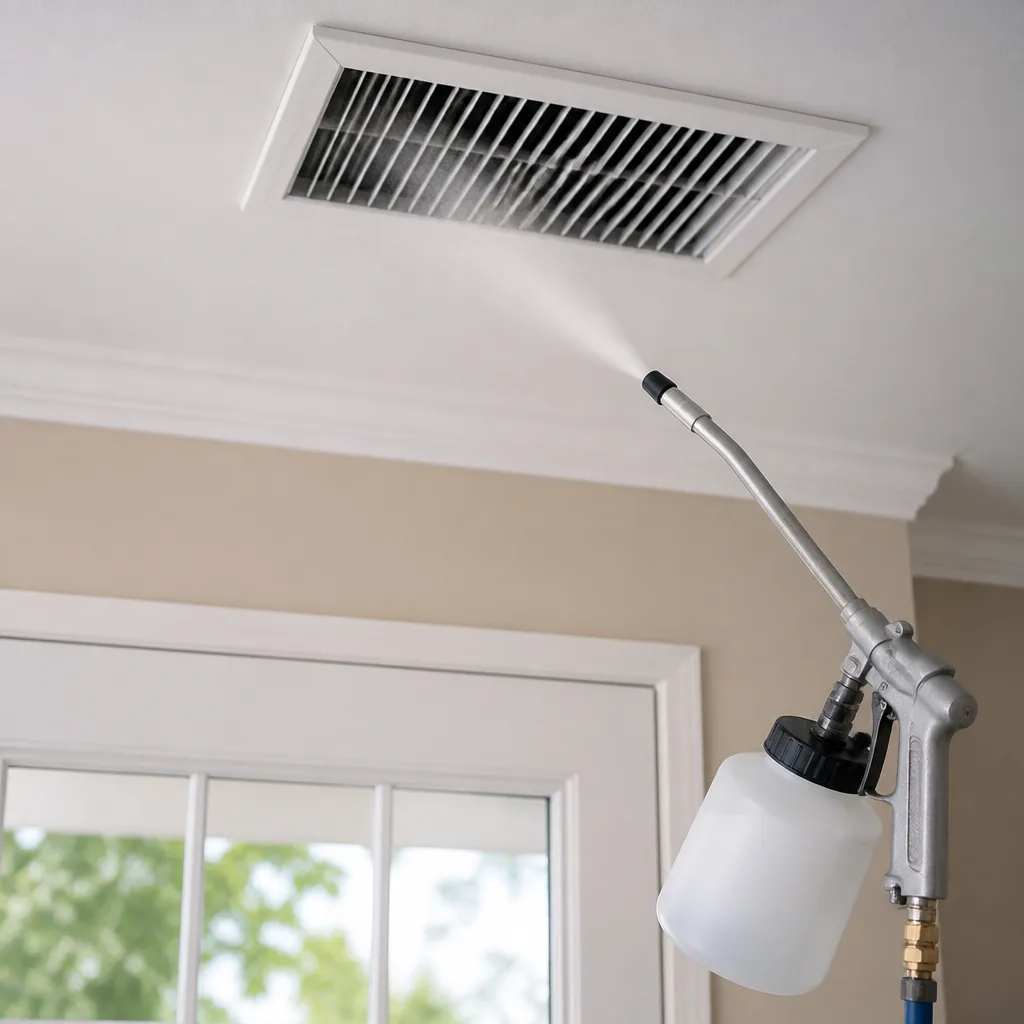 Sanitizing & deodorizing
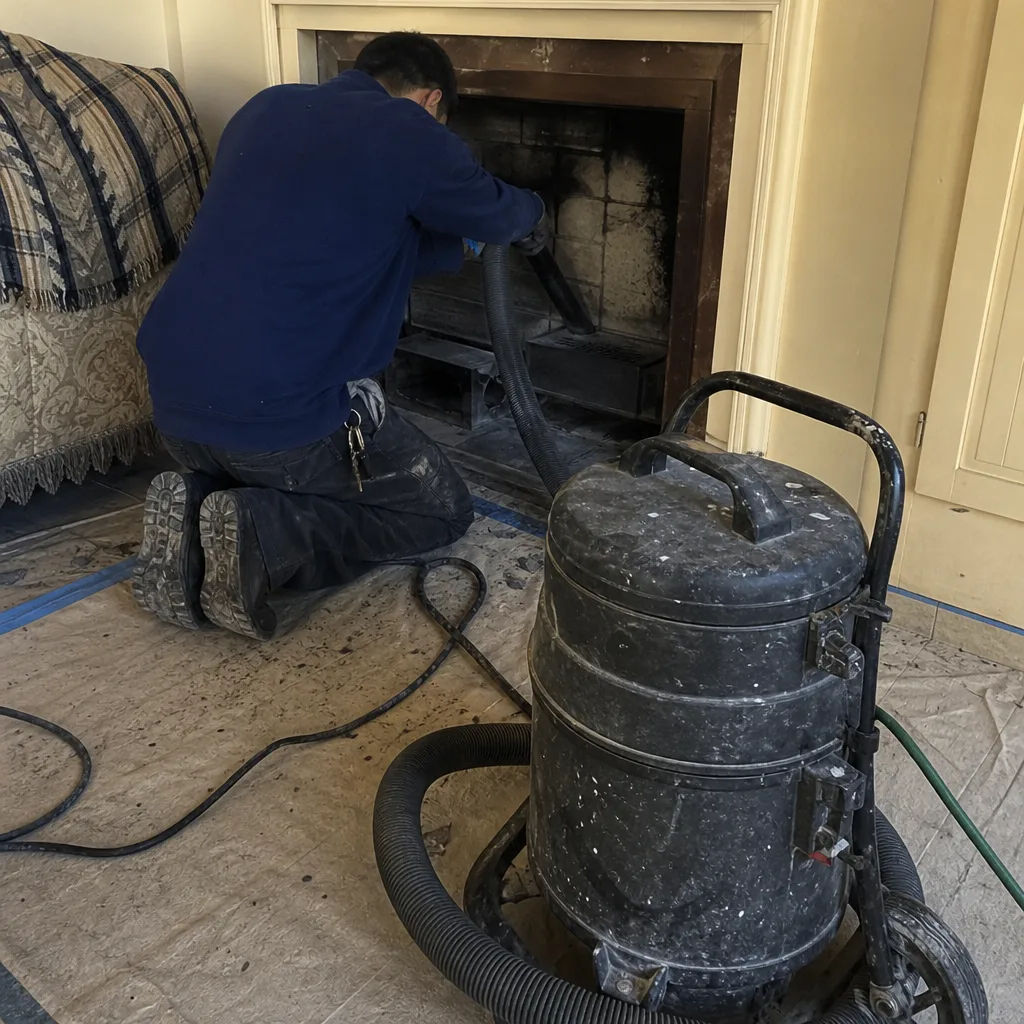
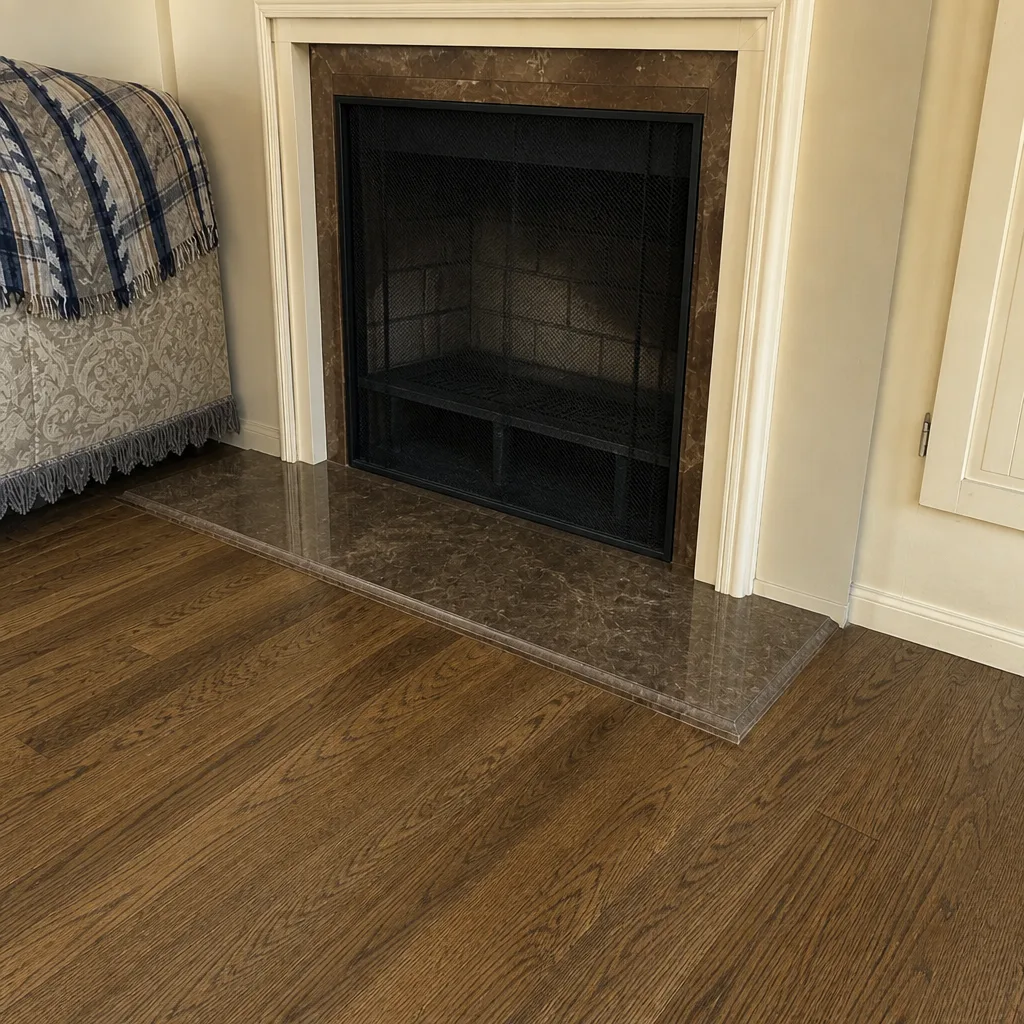
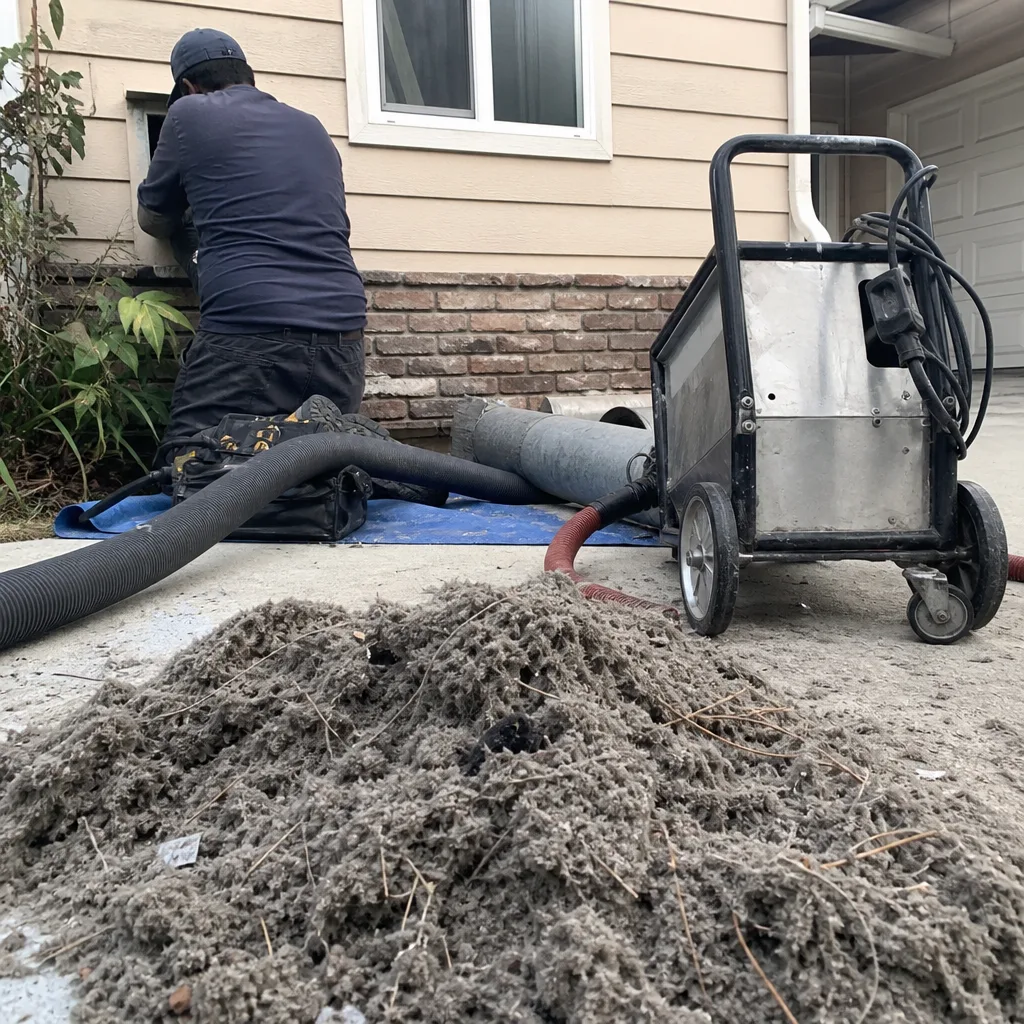
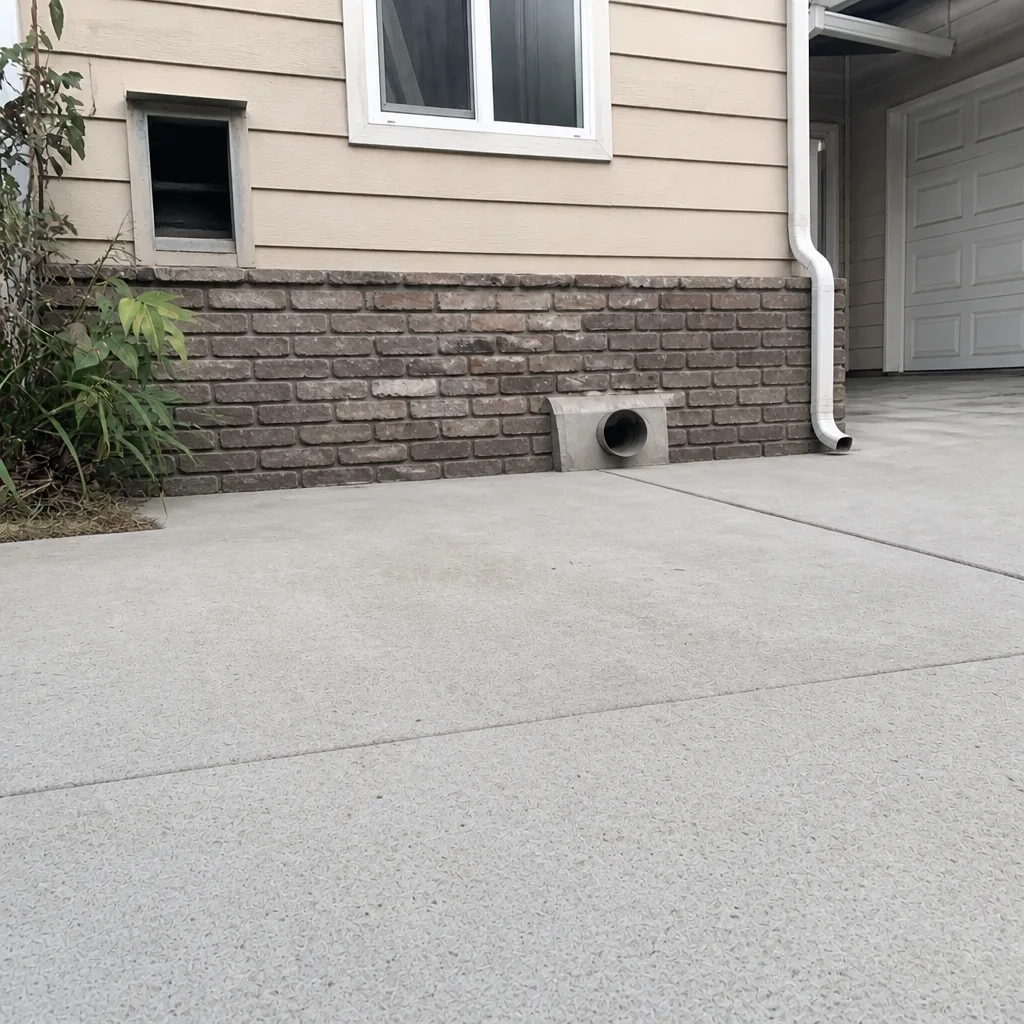
Whole-system duct and dryer vent check with before-and-after photos - you see exactly what came out of your vents
That "$99 whole-house special" is a bait ad - the real number appears once they are in your hallway, or the "clean" is a shop-vac at the register. We photograph the inside of your ducts before and after instead.
Seasonal Air Duct Cleaning Care for Floral Park: Year-Round Homeowner’s Guide
Spring and fall are the windows most duct cleaning guides recommend, and in much of the country that advice holds. In Floral Park it often runs a season behind. Our highest-contamination stretch tends to arrive from August through November, when wildfire smoke settles into the valleys and Santa Ana winds drive dry, dust-laden air through every gap in a house. A homeowner who books a cleaning in March may be sweeping out last year’s problem right before the new one loads up. This guide replaces the generic four-season calendar with one built for Floral Park: what actually happens to your ductwork each part of the year, and when professional service earns you the longest clean-air stretch.
Quick Answer
In Floral Park, the most useful time to clean air ducts is late spring, before cooling demand peaks, paired with a second look in late fall after smoke season and Santa Ana wind events have passed. Winter is the season to focus on duct sealing and filtration, because tightly closed homes trap whatever the ducts are holding. The right schedule follows local air events, not the national spring-and-fall default.
Styles & brands we work with
- Whole-home duct cleaning
- Dryer vent cleaning
- Camera inspection
- Sanitizing & deodorizing
Table of Contents
- Why Floral Park’s Climate Breaks the Standard Cleaning Calendar
- How Wildfire Smoke Behaves Inside Ductwork
- Pre-Summer Tasks: Coil Inspection and Duct Integrity
- After the Santa Ana Winds: Return-System Debris
- Winter: Sealed Homes and Low Ventilation Rates
- How to Time Professional Service Around Demand Peaks
- What a Proper Inspection Looks Like
- Common Mistakes to Avoid
Why Floral Park’s Climate Breaks the Standard Cleaning Calendar
National duct cleaning advice is written for a place with four distinct seasons: a wet spring, a humid summer, a leaf-fall autumn and a freezing winter. Floral Park doesn’t work that way. Our year splits roughly into a mild, damp stretch in winter and early spring, a hot and dry summer, and a late-summer-to-fall window when two very different air events collide, wildfire smoke and Santa Ana winds. Each one loads your duct system differently.
The practical result is that contamination here doesn’t build at a steady rate. It accumulates in bursts. A house can sit at a manageable dust baseline for months, then take on a heavy load of fine ash and wind-driven grit in a matter of weeks. That’s the single biggest reason a homeowner who cleans on a fixed annual date often feels like the ducts “got dirty again fast.” They didn’t get dirtier than usual. They got hit by a seasonal event the calendar didn’t account for.
There’s a second local factor: HVAC demand. Cooling season is long and hard here, and the system runs for many hours a day through the hottest months. Every one of those hours moves air through the same ductwork, and the more the blower runs, the more particulate it deposits on duct walls and the more it stirs up whatever is already sitting there. A system that runs heavily all summer distributes both fresh and settled contamination across the whole house.
So the Floral Park calendar we recommend looks different from the generic one. It’s built around three anchors: a pre-summer check before the system starts working hard, a post-wind-event assessment once the fall air events have passed, and a winter focus on sealing and filtration while the house is closed up. Everything else in this guide hangs off those three anchors.
How Wildfire Smoke Behaves Inside Ductwork
Wildfire smoke is not the same as household dust, and ductwork treats it differently. Ordinary dust is relatively coarse. It settles on horizontal surfaces, collects on return grilles and duct floors, and a standard vacuum extraction lifts most of it. Smoke particulate is far finer, and it behaves more like a gas than a solid. It travels wherever air travels, which means it rides straight through the return system, past the filter, and into the supply runs before it ever settles.
What that means in practice:
- Smoke coats surfaces evenly, not just on the floor of the duct. Fine particulate deposits on duct walls, plenum interiors and the blower housing in a thin, sticky film that ordinary dusting won’t touch.
- Odor lingers after the smoke clears. The smell homeowners notice weeks later is often coming from residue inside the air pathway, not from outside air. That residue keeps releasing odor every time the system runs.
- Standard filters catch some of it, not all. A typical filter stops a good share of the larger smoke particles, but the finest fraction passes through and accumulates downstream.
- Repeated smoke events compound. One smoky week leaves a light film. A season of them leaves a layer that a filter can’t undo, because the contamination is now on the duct surfaces rather than in the air.
This is where professional equipment earns its keep. Rotary-brush contact cleaning, the kind of work done with Rotobrush and Nikro systems, physically scrubs duct walls rather than just pulling air through them. A vacuum alone removes loose debris. A rotary brush loosens the film that smoke leaves behind, and the vacuum captures it. For homes that have been through a heavy smoke season in Floral Park, that difference is what actually restores the system.
If you’ve been through a smoke event and the smell won’t leave, the problem is in the air pathway, not the room. That’s the point at which air duct cleaning shifts from routine maintenance to something worth scheduling.
Pre-Summer Tasks: Coil Inspection and Duct Integrity
Before cooling season cranks up, every Floral Park homeowner has a window to catch problems cheaply. Once the system is running long hours in the heat, a small leak or a dirty coil becomes a bigger, more expensive problem, and it’s far harder to isolate because the system is never off long enough to inspect properly. Late spring is the moment to look.
Here’s the sequence we recommend, in order:
- Inspect the evaporator coil. A dirty coil restricts airflow and forces the blower to work harder. It also becomes a wet surface that collects dust, which turns into biological growth over a hot summer. A coil that’s already loaded going into summer will only get worse.
- Check duct integrity at the joints and seams. Look for disconnected runs, torn flex duct, crushed sections, and gaps at the plenum and register boots. In a hot, dry climate, flex duct can crack and tape can dry out and let go. Every leak is air you paid to cool escaping into an attic or wall cavity.
- Confirm the filter setup is right. The filter should be the correct size, seated properly, and matched to the system’s airflow. An overly restrictive filter starves the blower. A cheap one passes most fine particulate downstream.
- Look at the return side specifically. Returns pull in more debris than supplies because they draw from the living space. Check return grilles, the return plenum, and any return duct that runs through an unconditioned space.
- Seal before you clean, where sealing is needed. Cleaning a leaky system is a temporary fix. Sealing the leaks first means the cleaning holds. We repair what we find so cleaned ducts stay clean.
A pre-summer pass through these steps catches the problems that turn into a mid-July service call. It’s also the natural moment to have the full system cleaned, so the ducts are clear before months of heavy air movement. Our HVAC cleaning work covers the coil and air-handler side of this check, which is where a lot of pre-summer problems hide.
After the Santa Ana Winds: Return-System Debris
Santa Ana winds are the other half of Floral Park’s fall contamination story, and they work differently from smoke. Where smoke rides the air pathway as fine particulate, Santa Ana winds drive high-velocity outdoor air against the building envelope. That pressure pushes dust, grit, pollen and dry plant material through every gap: around window frames, through attic vents, at door sweeps, and into any leak in the duct system itself.
The return system takes the brunt of it. Returns are designed to pull air out of the living space, and during a wind event the living space is full of airborne debris. That debris gets drawn into the return grilles and the return plenum, where it settles. Over a single wind event a return system can pick up a noticeable load of fine grit, and multiple events stack.
Two things matter after a Santa Ana stretch passes:
- Pressure-test the return system. Wind events reveal leaks that are invisible on a calm day. If return ducts are pulling from an attic or crawl space, a leak means the system is drawing in outdoor debris directly, not through a filter.
- Clean the returns before the supplies. Cleaning the supply side first just pushes the return-side contamination forward. The right order is to clean the source of the load first, then move through the rest of the system.
The reason this matters for homeowners in Floral Park is that the contamination is invisible from the register. What you see at the grille is a fraction of what’s in the ducts behind it. Contamination-control equipment in the Abatement Technologies line is built for exactly this situation: it keeps debris contained during extraction rather than letting it re-enter the living space.
Winter: Sealed Homes and Low Ventilation Rates
Winter in Floral Park is mild, but it changes how the house behaves in a way that matters for ducts. People close windows. Doors stay shut. The house tightens up, and ventilation rates drop. Whatever is sitting in the ductwork stops getting diluted by outside air and starts getting recirculated through the living space instead.
That’s the winter problem: not more contamination, but less fresh air to offset the contamination that’s already there. A house that felt fine in October can feel stale and dusty in January, because the same duct load is being redistributed with no fresh-air exchange. Homes with pets, young children or allergy sufferers notice it first.
Winter is the season to work on the system’s ability to clean itself:
- Seal the leaks. Duct sealing reduces the amount of air the system pulls from attics, wall cavities and crawl spaces. That alone cuts a big share of what gets into the supply air, and it’s the single most effective winter measure.
- Upgrade filtration where it’s compatible. A higher-MERV filter, properly sized for the blower, catches more of the fine particulate that circulates when the house is closed. We work with Honeywell and AprilAire filtration components, so the recommendation is matched to the system rather than guessed at.
- Address biological growth in the air handler. A coil that collected moisture all summer can become a growth surface. By winter, if the system smells musty when it runs, the air handler needs attention.
- Keep return paths clear. Furniture, rugs and closed doors can block return air, forcing the system to pull from worse places. A few minutes of layout adjustment is worth more than it sounds.
The broader point: air quality is a system problem, and in winter the system gets stressed. Sealing and filtration are the two moves that hold the line while the house is buttoned up. Full dryer vent cleaning is also worth scheduling in winter, since a closed house is exactly when you want to be sure a fire-risk vent is clear.
How to Time Professional Service Around Demand Peaks
Timing is not a marketing detail; it’s how you get the longest useful life out of a cleaning. Clean at the wrong moment and you pay for a reset you immediately undo. Clean at the right one and the ducts stay clear for a much longer stretch.
Here’s the Floral Park calendar we recommend:
- Late spring (April to May): Full cleaning, coil inspection, and duct seal. This gets the system to a clean baseline before cooling season runs it hard.
- Early summer (June): Confirm filtration is right for the heavy-use months. Adjust or replace as needed before the hottest stretch.
- Late fall (October to November): Post-wind-event assessment and a return-side cleaning if a heavy smoke or Santa Ana stretch occurred. This is the second big reset of the year.
- Winter (December to February): Sealing and filtration focus. No need for a full cleaning unless the system has a specific problem.
- Off-peak windows: If you can only schedule once a year, late spring is the single best single cleaning. It resets the system before the heaviest demand period.
Two scheduling realities are worth knowing. The first is that demand peaks here mirror HVAC demand, which means warm-weather weeks and post-smoke-event weeks fill first. Booking ahead in late spring gets you the slot that actually lines up with the calendar, rather than booking after the smoke has already arrived. The second is that a cleaning done right takes real time; a fast pass that treats the vents and skips the plenum and returns is not the same job. Speed is not a signal of quality in duct cleaning. It’s usually the opposite.
When homeowners ask us when to clean in Floral Park, the honest answer is: it depends on what the house has been through in the last twelve months. A house near open space that saw two smoke events is a different case from a tightly built house that ran its system through a quiet season. The calendar is a starting point; the inspection sets the actual plan.
What a Proper Inspection Looks Like
Before anyone cleans your ducts, they should look at them. A real inspection opens the system at the plenum and at selected registers, uses a camera to see inside the runs, and records what’s there. Here’s what a proper inspection covers:
- Supply and return plenums, where the contamination that matters most accumulates.
- The air handler and coil, including drainage and any signs of moisture or growth.
- Duct runs, checked for debris, disconnections and crushed or damaged sections.
- Register boots, where duct meets room, and the source of most visible dust at grilles.
- Photo documentation, before and after, so the homeowner sees the condition rather than takes it on faith.
The last item matters more than it’s often treated. Duct cleaning is one of the few home services where the customer can’t easily verify the work happened. Before-and-after photos of a home’s own ducts solve that. Ask for them. A contractor who does the work properly has no reason to withhold them.
Some service also needs specialized equipment. Fine particulate from smoke and wind events is best handled with extraction systems built for contamination control, and rotary-brush contact cleaning for the duct walls. When you’re comparing quotes, ask what equipment will actually be used. If the answer is vague, that tells you something.
Common Mistakes to Avoid
- Cleaning in early spring and assuming you’re set for the year. In Floral Park, the heaviest contamination usually lands from August through November. A March cleaning resets the system, but the fall events reload it. Plan a second look in late fall.
- Letting a low advertised price be the deciding factor. Duct cleaning is a service where the price and the work are tightly linked. A very low price rarely covers the plenum, returns, and rotary-brush contact cleaning the job actually needs. Ask exactly what’s included before comparing on price alone.
- Skipping the return system. Returns pull in far more debris than supplies. A cleaning that treats the registers and ignores the returns and plenum is not addressing where the load actually sits.
- Cleaning a leaky system without sealing it. If the ducts are pulling air from an attic or crawl space, a cleaning just re-contaminates as soon as the system runs. Seal first, then clean.
- Ignoring the dryer vent. The dryer vent is a separate air pathway and a fire-safety concern. In a closed-up winter home, it’s one of the most important things to keep clear.
- Assuming a filter upgrade solves a duct problem. Filtration helps the air the system is moving. It does not clean contamination that has already settled on duct walls. Filters and cleaning do different jobs.
- Trusting a quick “vent vacuum” as duct cleaning. Several minutes at the register is not a cleaning of the air pathway. Proper work takes time, opens the system, and documents what it found.
See the difference
 Before
 After
 Before
 After
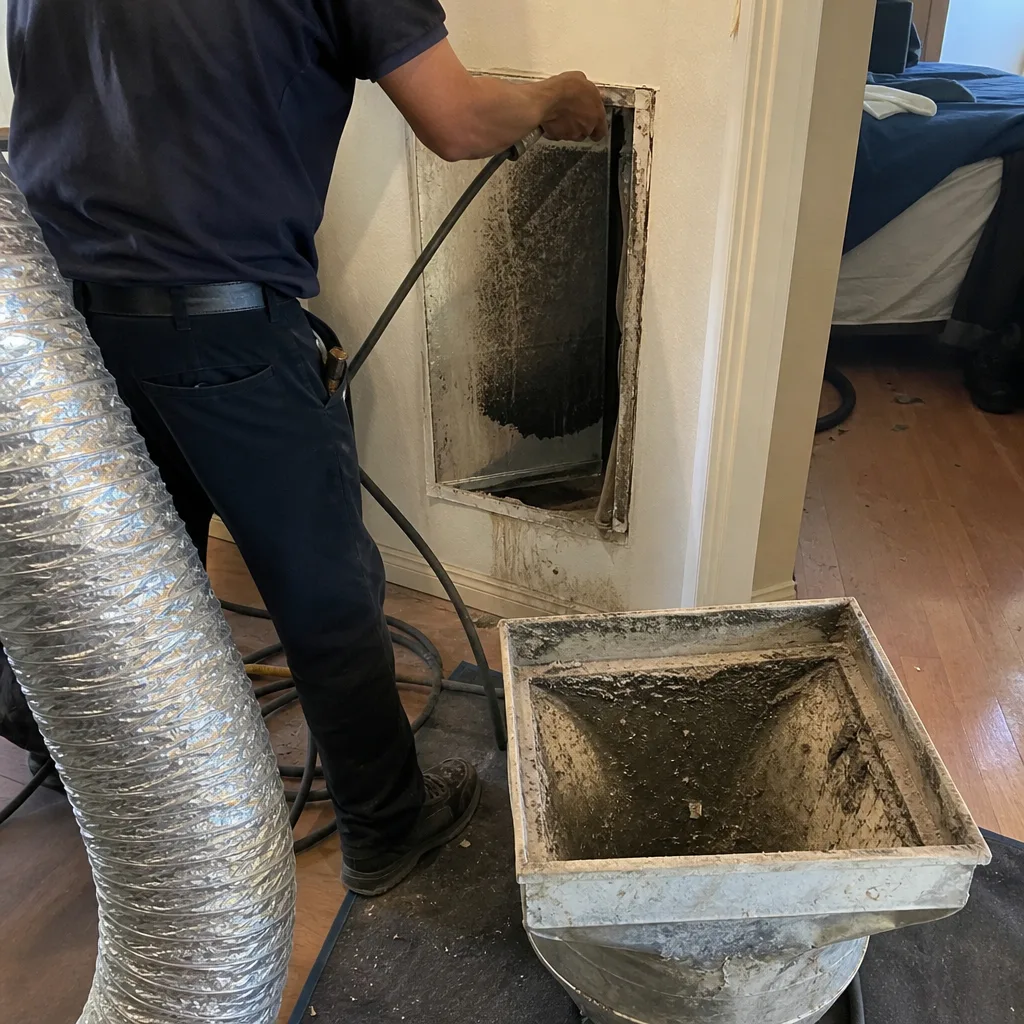 Before
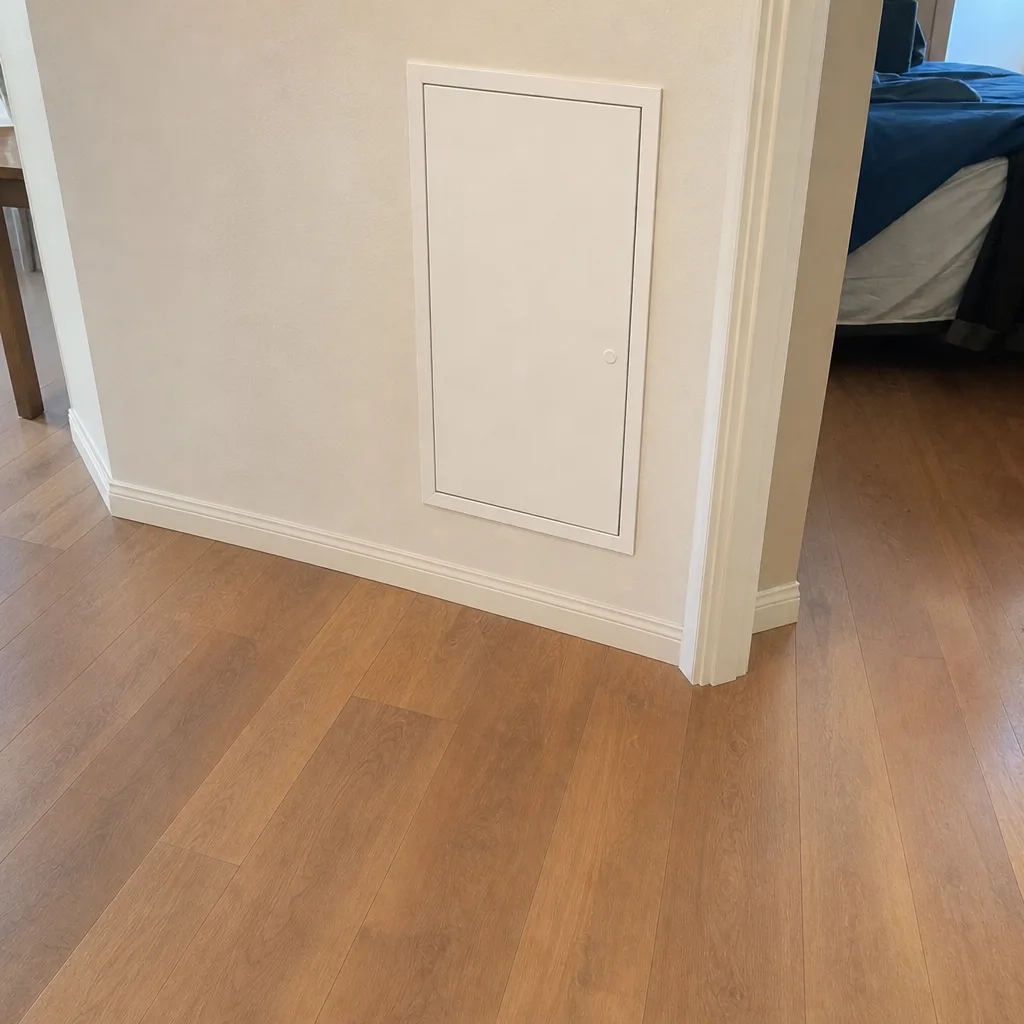 After
When to Call a Professional
Some signs are obvious, others aren’t. Call a professional if you notice persistent dust at the registers or a musty smell when the system runs, if anyone in the home has consistent allergy symptoms that worsen indoors, if you’ve been through a heavy wildfire smoke event or a strong Santa Ana wind stretch and the smell or dust won’t clear, if a recent remodel generated construction dust, or if you’ve never had the ducts inspected. Also call if you can see debris inside a supply register, or if the dryer is taking noticeably longer to dry a load. Those are all signals that the air pathway needs a real inspection, not a guess.
Floral Park Air Duct Cleaning offers free estimates in Floral Park. Our technicians have up to 11 years of experience, and we clean the whole air pathway, not just the registers. Call (833) 966-4423. We answer 24/7. Fast dispatch from 7am to 7pm, Sunday through Friday.
Frequently Asked Questions
Most Floral Park homes benefit from one full cleaning a year plus a fall assessment, especially after a heavy smoke or Santa Ana wind season. If you only clean once a year, late spring is the best single slot. Homes with pets, allergy sufferers or recent remodels may benefit from a second look in late fall. Call (833) 966-4423 for an exact quote; estimates are free.
It’s both, but the duct side is what most homeowners miss. Fine smoke particulate coats duct walls and the blower, and it keeps releasing odor every time the system runs. A high-MERV filter catches some of it, but the film that settles inside the ducts needs rotary-brush contact cleaning to remove. If the smell lingers weeks after the smoke clears, the residue is in the air pathway.
Professional rotary-brush and negative-pressure extraction equipment, not a shop vac with a hose. The brands matter less than the category: Rotobrush and Nikro systems are the same class of equipment used by commercial and restoration contractors, and contamination-control tools in the Abatement Technologies line are built for remediation work. Ask what equipment will be used before you book. Call (833) 966-4423 for an exact quote; estimates are free.
Because they’re usually a different job. Low quotes often cover only the visible vents, skip the plenum and returns, and use consumer-level equipment. The work that actually reduces contamination, opening the system, rotary-brush cleaning of duct walls, and extraction with contamination control, takes time and real equipment. One flat price per system agreed before work starts, with before-and-after photos, is what a well-run job looks like. Call (833) 966-4423 for an exact quote; estimates are free.
Yes. Construction dust is one of the more reliable reasons to clean, because drywall, sawdust and fine grit tend to settle throughout the return system during a remodel. Even if the ducts were clean before, the project loaded them. This is particularly worth scheduling in Floral Park before cooling season, so the dust doesn’t circulate through the house all summer.
Sometimes, but the problem usually shows up as a symptom rather than a visible fact. By the time dust or odor is obvious, the load has been building for a while. An inspection is cheap relative to a system that’s been running dirty through a heavy season. For homes that have never had ducts inspected, scheduling a first look before the next summer or fall event is the lower-risk choice.
The Bottom Line
Floral Park doesn’t follow the national duct cleaning calendar, and building a routine around that default calendar is the main reason homeowners feel like their ducts “get dirty again fast.” The right framework has three anchors: a pre-summer cleaning and seal before the system runs hard, a late-fall assessment after smoke and Santa Ana wind events have passed, and a winter focus on sealing and filtration while the house is closed up. If you only schedule one cleaning, late spring is the best single slot. If you’ve been through a heavy smoke season, don’t wait for spring. The load is already there.
Call (833) 966-4423 for a free estimate. We answer 24/7. Fast dispatch from 7am to 7pm, Sunday through Friday. You can also start with our Floral Park Air Duct Cleaning page to see the full range of services.
Written by the team at Floral Park Air Duct Cleaning.