
Last updated November 25, 2026
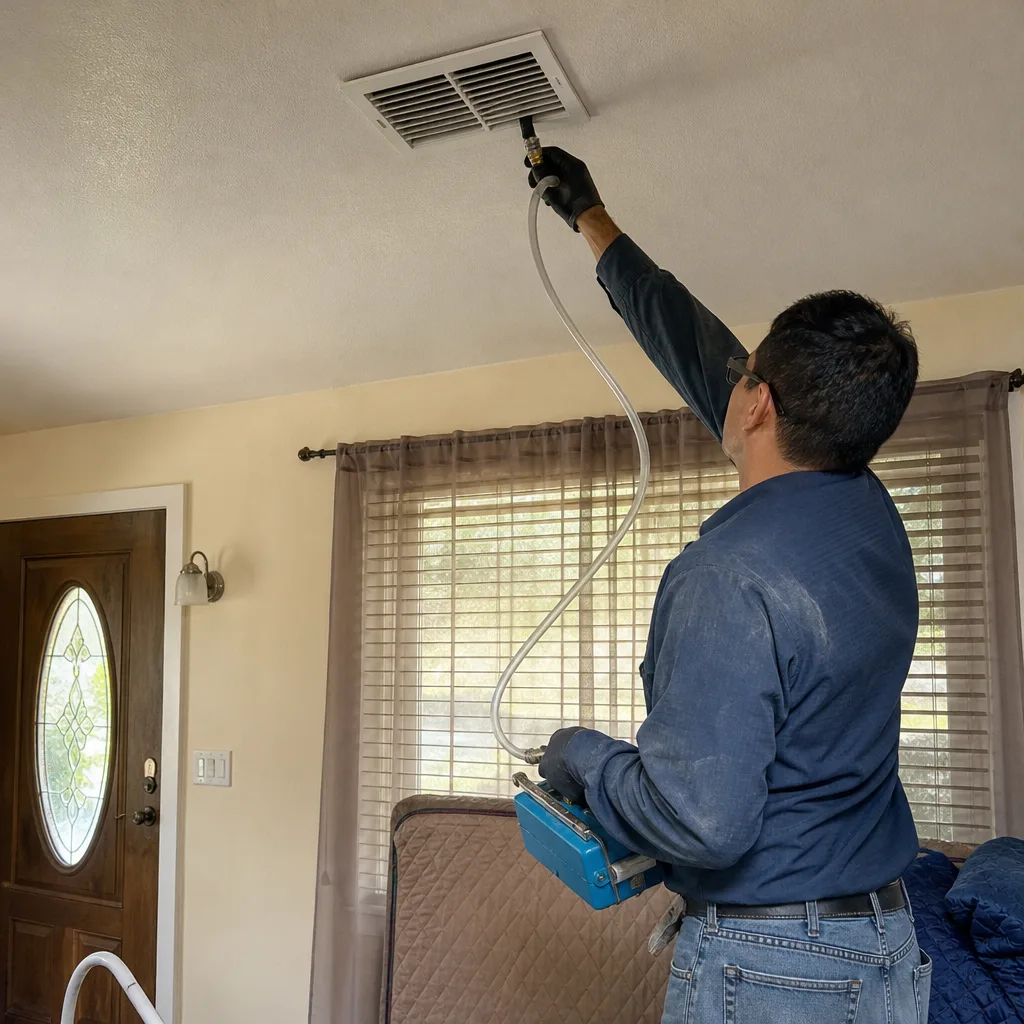
 Whole-home duct cleaning
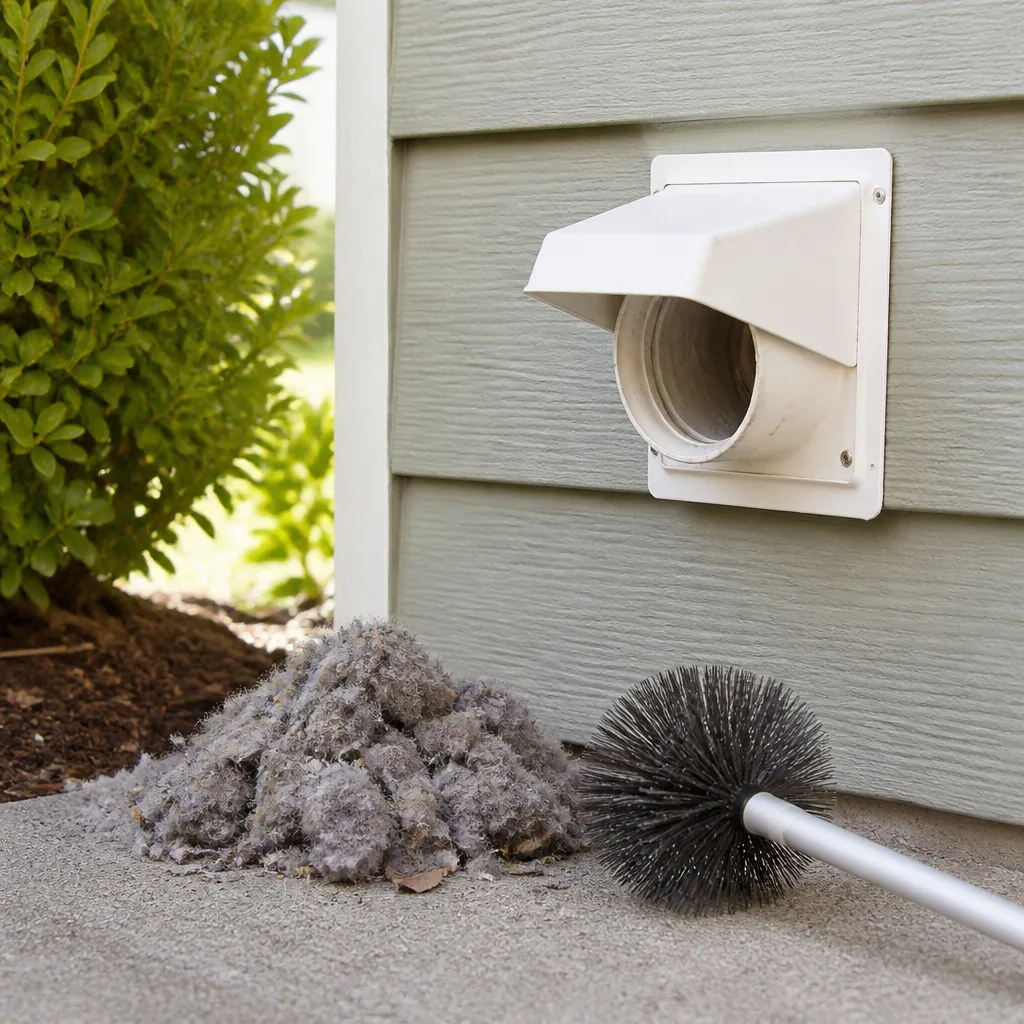 Dryer vent cleaning
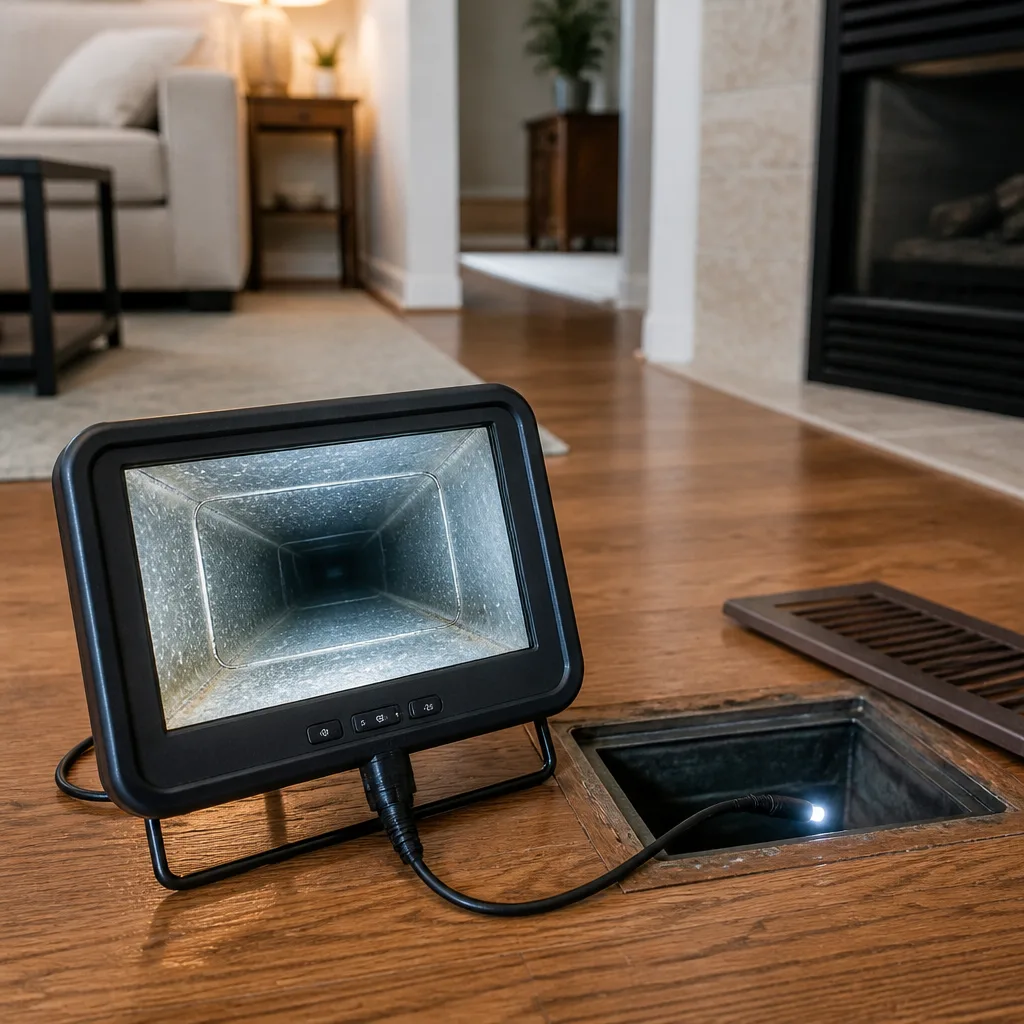 Camera inspection
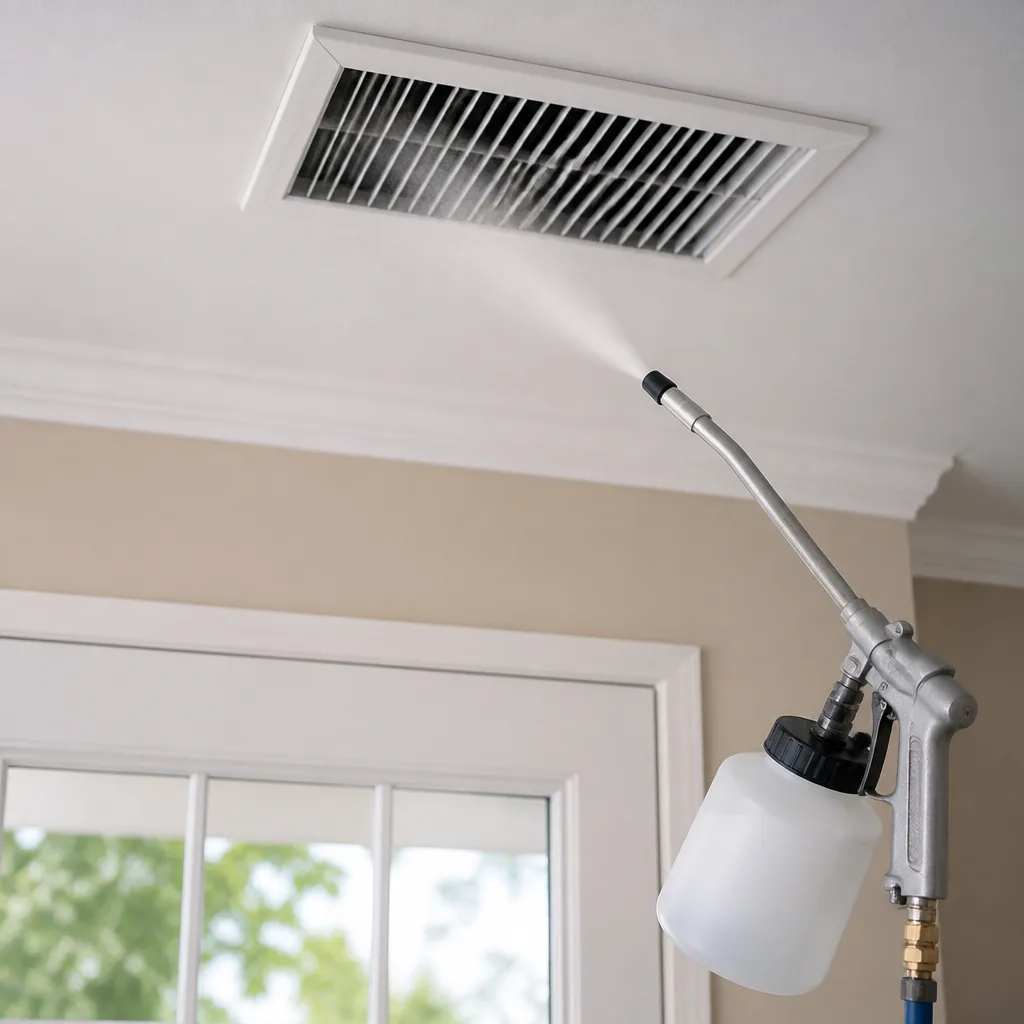 Sanitizing & deodorizing
Whole-system duct and dryer vent check with before-and-after photos - you see exactly what came out of your vents
That "$99 whole-house special" is a bait ad - the real number appears once they are in your hallway, or the "clean" is a shop-vac at the register. We photograph the inside of your ducts before and after instead.
The Complete Guide to Air Duct Cleaning in Floral Park
Cleaning every register you can see is the easy part. The harder truth is that your return grilles, the main trunk lines running through the attic or crawlspace, and the branch runs feeding each bedroom are where the debris actually settles, and those are the sections most cheap “blow-and-go” jobs never touch. In California-built homes, dust, pet hair, drywall grit, and construction residue collect in predictable places by design. This guide maps the full air pathway from return to supply boot, explains what professional-grade extraction actually does, and shows you how to verify a real job was done. We’ll also cover how Floral Park’s dry climate shapes the problem and what a completed job should leave in your hands.
Quick Answer
A thorough air duct cleaning in Floral Park means source-removal cleaning of the entire duct system under continuous negative-air pressure, not a surface pass with a shop vac. It includes the return plenums, main trunks, branch runs, and supply boots, followed by airflow verification and before-and-after documentation. Anything short of that leaves settled debris in the trunk lines ready to re-contaminate the air you breathe.
Styles & brands we work with
- Whole-home duct cleaning
- Dryer vent cleaning
- Camera inspection
- Sanitizing & deodorizing
Table of Contents
- The Anatomy of a California-Built Duct System
- What Negative-Air Extraction Actually Does
- Source Removal vs. Contact Vacuuming
- How Floral Park’s Dry Climate Changes the Problem
- What a Full Duct Cleaning Job Looks Like, Step by Step
- How to Verify the Work Was Actually Done
- Beyond Cleaning: Repair, Sealing, and Air Quality
- How Often Ducts Really Need Cleaning
The Anatomy of a California-Built Duct System
Debris doesn’t fall into your ducts randomly. It collects where the airflow slows down and where the system geometry traps it. To understand why certain sections of your ductwork concentrate contamination, you need to know how the system is laid out.
A typical California home – especially the slab-on-grade and low-pitch ranch houses common across the Floral Park area – uses a trunk-and-branch layout. The furnace or air handler pushes conditioned air into a rectangular main trunk, usually sheet metal or foil-faced flex duct, which runs through the attic or crawlspace. Smaller branch lines branch off the trunk to feed individual rooms through supply boots cut into the floor or ceiling. Return air comes back through larger grilles and a dedicated return plenum.
Here’s where the debris lands:
- The return plenum and main trunk carry the highest volume of air, so they collect the most dust, hair, and larger debris. Most of it settles where the trunk meets the air handler in a low-velocity “settling zone.”
- Branch takeoffs – the collars where branches meet the trunk – are turbulence points. Lint and hair wrap around the interior edges and build into mats over time.
- Flex duct sag between hangers creates low spots where heavier particles collect, especially in horizontal attic runs.
- Supply boots – the sheet metal box at the register – collect loose drywall dust and construction grit left over from the build, and it rarely moves once settled.
- Register grilles and diffusers are the most visible and the least important. Cleaning them alone does almost nothing for air quality.
Floors, closets, and utility chases in Floral Park homes also hide short runs and transition boxes that many technicians skip. A real inventory of the whole air pathway is the starting point of any job worth paying for.
What Negative-Air Extraction Actually Does
Negative-air extraction is a method that puts the entire duct system under continuous vacuum while a rotary brush or air whip agitates the interior surfaces. The debris loosens and is pulled into a HEPA-filtered collection unit outside the living space, rather than being pushed back into rooms.
Here’s why that matters: cleaning method without containment just moves the problem. If a technician runs a brush through a run without holding the system under negative pressure, the loosened debris has nowhere to go but back into the room through the nearest register. You get visible dust clouds, a temporary sense of “clean,” and a system that re-contaminates within days.
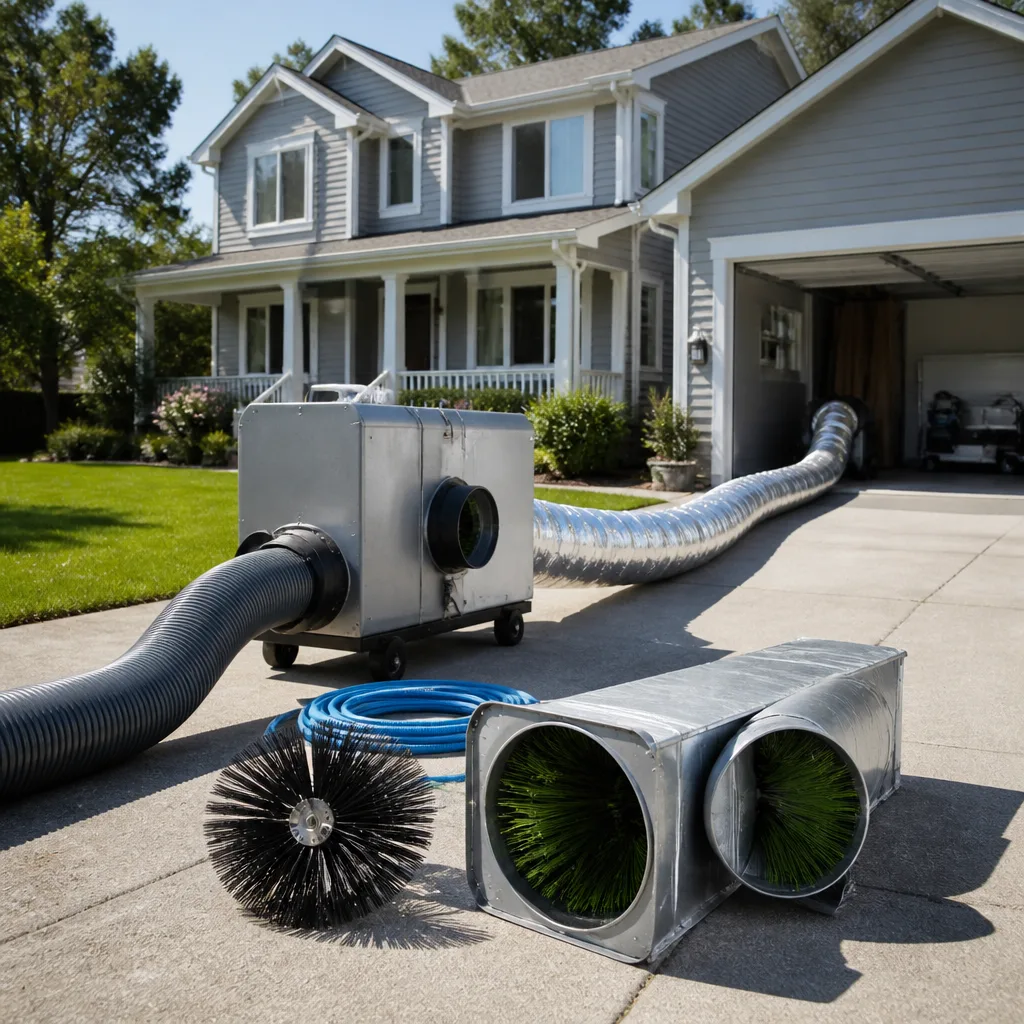
Professional-grade equipment changes the equation. We work with Rotobrush rotary brush systems for the interior cleaning pass and Nikro high-capacity negative-air machines for continuous vacuum control. The same category of equipment is used in commercial and restoration work, where contamination control is a real requirement rather than a marketing line. For light-commercial jobs and heavily contaminated systems, Abatement Technologies air-quality tools raise the containment standard further, so what’s pulled out stays out.
Compare that with the shop-vac approach you’ll see in low-price offers. A shop vac pulls a small fraction of the air volume a negative-air machine does, and without a HEPA stage it can exhaust fine particulate right back into the room. That is one reason the same job done two different ways produces two completely different results.
Source Removal vs. Contact Vacuuming
There are two different cleaning philosophies in this trade, and they produce very different outcomes. Knowing which one you’re being quoted is the single most useful thing you can do before you book a duct cleaning in Floral Park.
Contact vacuuming uses a vacuum head applied only to what the technician can reach – typically the register box and the first few feet of accessible duct. It’s fast, it looks tidy from the outside, and it leaves the trunk lines and branch interiors untouched. It’s the approach behind most low-price coupons, and it’s why so many homeowners feel cheated after a “cheap” job.
Source-removal cleaning addresses the entire system from return grille to supply boot. The steps are:
- Seal or block open registers and diffusers to maintain system pressure.
- Connect a high-capacity negative-air unit to the main trunk at the air handler, so the whole system is under vacuum.
- Open access points along the trunk and at branch takeoffs where accessible.
- Run a rotary brush or air whip through each branch run, working from the farthest register back toward the trunk so loosened debris is pulled out, not pushed in.
- Clean the return plenums and the interior of the air handler housing.
- Seal what can be permanently sealed and re-establish airflow.
- Replace filters and verify airflow at the registers.
Source removal takes longer and requires more equipment. It also produces a duct system in a genuinely different condition than a contact-vacuum pass, which is a real difference that shows up in airflow and dust-loading in the weeks that follow.
How Floral Park’s Dry Climate Changes the Problem
Dry air does something specific to indoor dust: it reduces the moisture film on duct surfaces and increases electrostatic cling. In Floral Park’s low-humidity climate, fine dust tends to stay airborne longer and to hold a static charge, so it deposits in thinner, more tightly bonded layers on duct walls rather than clumping into easy-to-remove masses.
Two practical consequences follow. First, a simple vacuum pass over the surfaces removes less than it would in a humid climate, because the dust is electrostatically bonded to the galvanized metal and the inner liner of flex duct. That is exactly why rotary brushes matter here – the mechanical agitation breaks the bond before the vacuum can carry the dust away. Second, the lightweight, dry particulate in a Floral Park home travels further through the system before settling, meaning supply branch runs that look clean from the register end can still hold a meaningful load deeper in.
Dry weather also means more airborne dust entering the return from open windows, patio doors, and exterior penetrations during the shoulder seasons. If you have a pet, the dry air turns shedding into a fine, airborne problem faster than humid climates do, and pet hair mats down around branch collars and return grilles.
The result is that duct cleaning frequency in Floral Park is often set more by how much dust the home takes in than by the calendar. Homes near open landscaping, homes with pets or allergy sufferers, and homes that have just gone through a remodel land on the shorter side of the recommended interval. Homes with sealed windows and a well-maintained filter land on the longer side.
What a Full Duct Cleaning Job Looks Like, Step by Step
A proper job for a Floral Park home follows a consistent order, and every step serves a purpose. If any of the steps are missing on yours, the results will be partial no matter how long the technician spent on site.
Step 1 – Inspection and system walkthrough. Before any equipment runs, the duct layout, air handler, and return locations are mapped. The technician checks for disconnected joints, crushed flex runs, and prior water staining. This is where a real specialist starts to differentiate between “cleaning” and “cleaning plus repair.”
Step 2 – Containment and negative pressure. The negative-air unit is connected and the system is sealed. Registers are blocked or recovered so that loosened material stays inside the ducting, not in your living room.
Step 3 – Interior cleaning. Rotary brush and air-whip tools pass through the trunk, branches, and boots. Returns are cleaned separately with the same containment in place.
Step 4 – Air handler and coil-face cleaning. The blower wheel, cabinet, and coil face are cleaned as part of HVAC cleaning, because a dirty air handler immediately re-contaminates anything downstream of it.
Step 5 – Repair and sealing. Disconnected joints, torn flex duct, and unsealed penetrations are addressed. We repair what we find, so cleaned ducts stay clean.
Step 6 – Filtration check. The filter cabinet, filter grade, and (where applicable) media filters or electronic air cleaners are reviewed. We’re familiar with Honeywell and Aprilaire filtration products and can recommend an upgrade if the current setup can’t handle what your home takes in.
Step 7 – Airflow verification and documentation. Register airflow is checked, and before-and-after photographs of the duct interiors are captured for the homeowner.
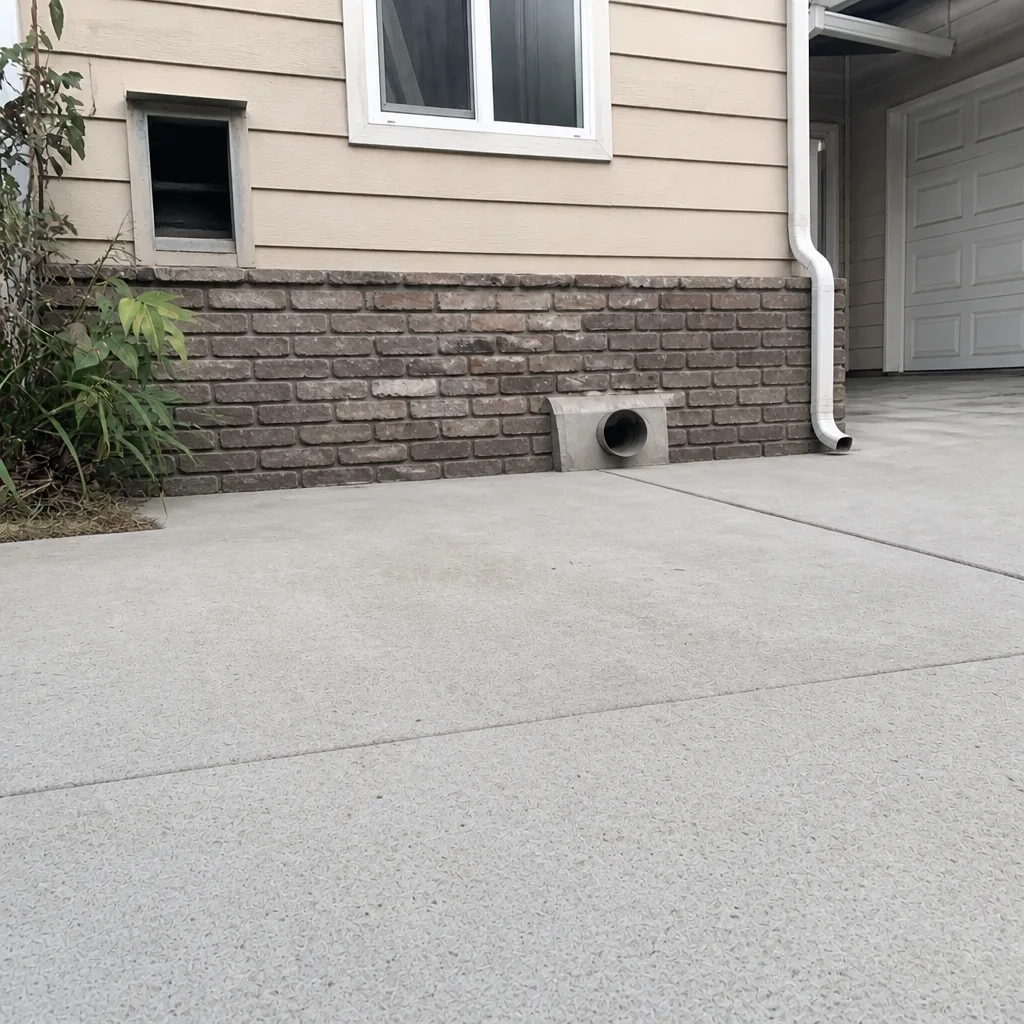
Dryer vent cleaning belongs in the same visit. Your dryer vent is a fire risk. We handle that too. A dryer vent clogged with lint is a safety problem separate from comfort, and it takes the same equipment and containment discipline. That’s why we include dryer vent cleaning as one of our core services rather than a bolt-on.
How to Verify the Work Was Actually Done
You can’t inspect the inside of a duct run yourself, and that’s the source of a lot of the skepticism in this trade. Here’s what to insist on so you’re not taking a technician’s word for it.
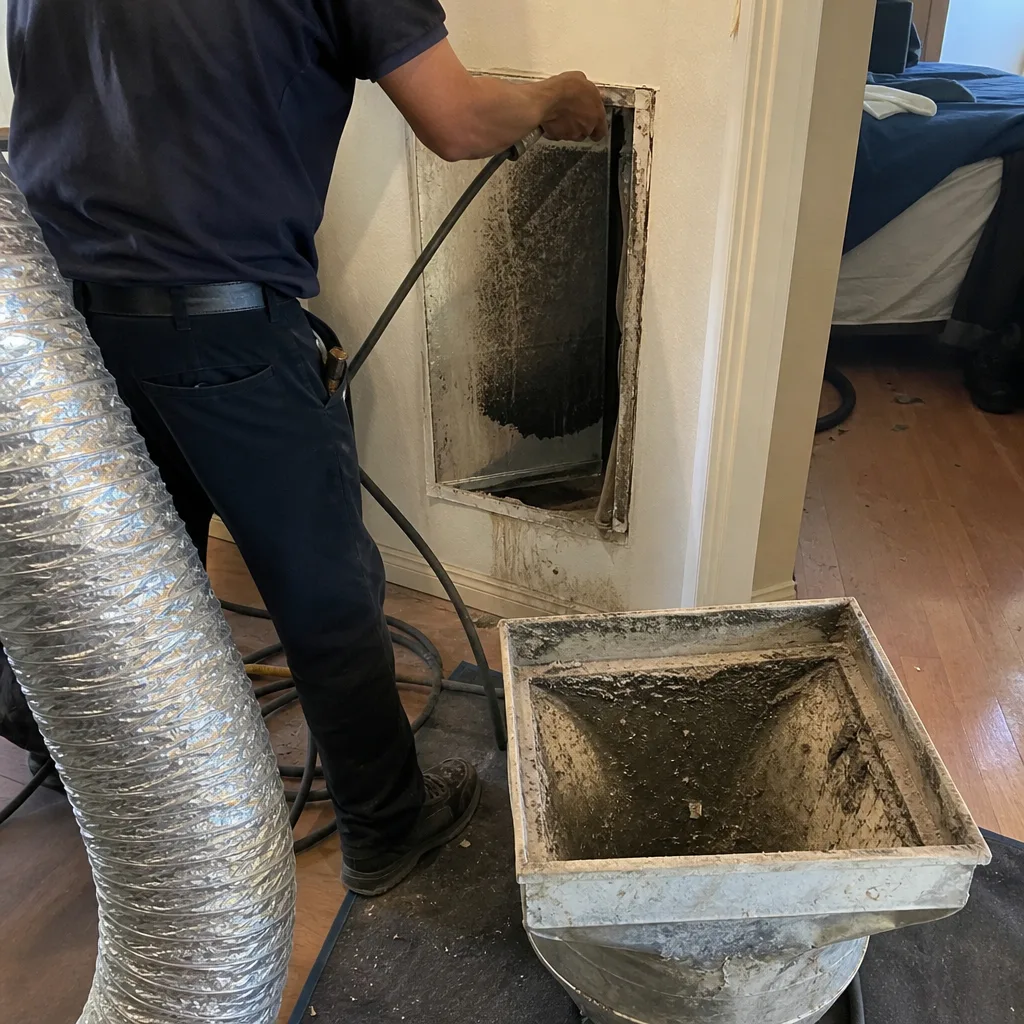
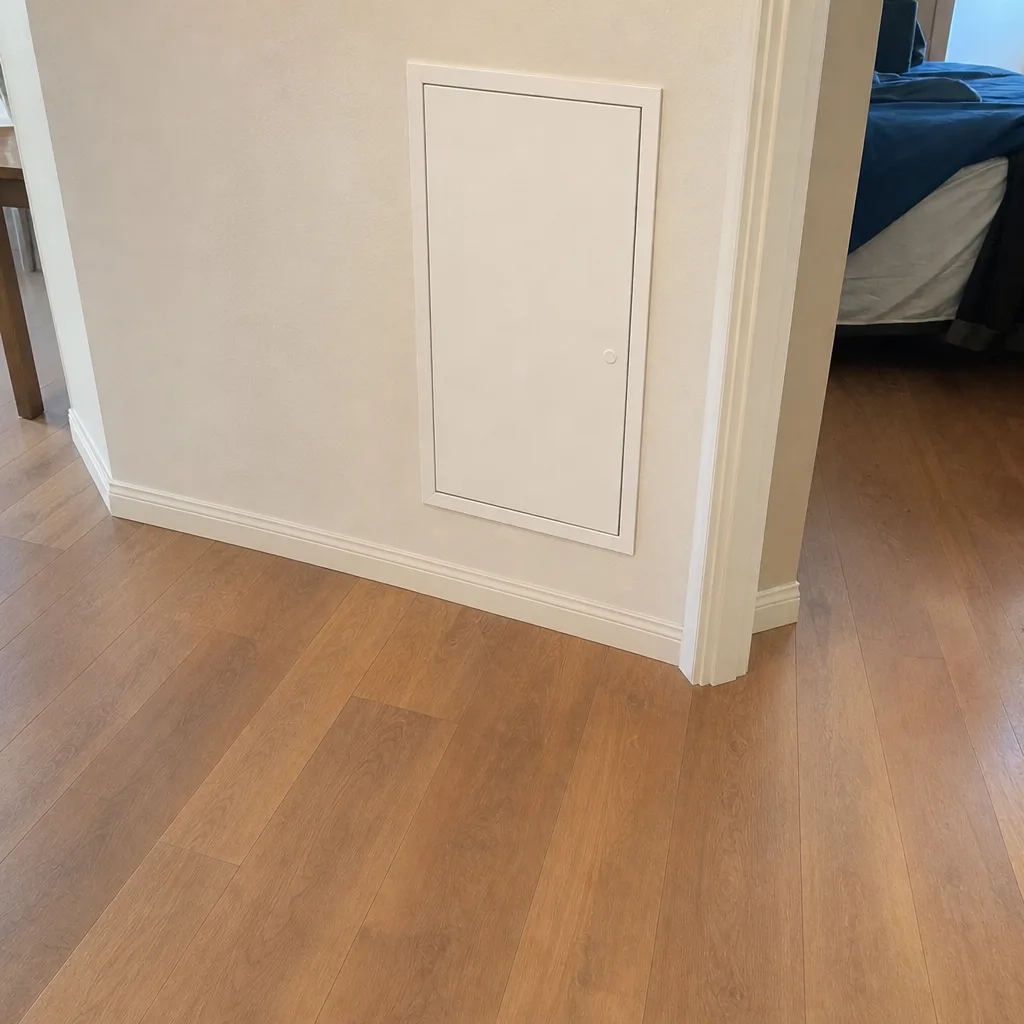
- Before-and-after photographs of your own ducts. Not stock photos, not a video of “a system” that could belong to anyone. The camera should point into your return plenum, your main trunk, and at least one branch takeoff, before and after cleaning. If the photos are the same angle and the same lighting and the difference is obvious, that’s a real job.
- Access port review. Cleaning every branch carefully requires access. Ask how many access cuts were made and how they will be sealed afterward. A job that shows no access points at all is a job that never made it past the register boots.
- Airflow check at the registers. A simple flow test at the nearest and farthest registers, before and after, tells you the system was put back together correctly and that hidden blockages weren’t left behind.
- Filter status. A dirty filter installed on the way out, or a clean filter swapped for a dirty one, tells you the technician was paying attention to the whole air pathway.
- Written summary. What was cleaned, what was repaired, and what was recommended. This is your record. If the “recommendation” is another service, you should still be able to see the photo evidence.
A company that shows you its own before-and-after photos, documents the access points, and hands you a written summary of repairs is a company that has to be accountable for its work. One flat price per system agreed before work starts closes the loop on the bait-and-switch question, too – no per-vent math, no surprises once the technician is inside.
Beyond Cleaning: Repair, Sealing, and Air Quality
Cleaning alone is a partial fix. If the ductwork has leaks, disconnected joints, crushed flex runs, or torn insulation, cleaned ducts will re-contaminate faster than sealed ones, and the HVAC system will lose a meaningful share of the air you paid to condition. Air quality is a system problem – we treat it as one.
Duct repair and sealing look at the whole envelope of the air pathway:
- Disconnected joints and loose collars at the trunk and branch takeoffs, common in older Floral Park homes where flex duct has sagged or the tape has dried out.
- Torn or crushed flex duct in the attic and crawlspace, where the run has been stepped on or pinched against framing.
- Unsealed penetrations through walls, floors, and exterior sheathing, which pull attic or crawlspace air into the return.
- Boot-to-floor gaps at the supply registers, which leak conditioned air into the wall cavity.
On the air quality side, sanitizing is a separate step. Where visible biological growth or rodent activity is present, we clean, repair, and then sanitize the affected interior surfaces with a product intended for ductwork. It’s not a spray-and-done upsell – it’s a targeted step that only makes sense after source removal is complete. Filtering upgrades (media filters, cabinet filters, or whole-home filters compatible with Honeywell or Aprilaire systems) sustain the result between service visits.
That full-lifecycle structure is why we work as an air duct cleaning specialist rather than a general contractor. Five service lines – duct cleaning, dryer vent cleaning, HVAC cleaning, repair and sealing, and air quality work – handled by one specialist means you’re not coordinating between a duct cleaner, an HVAC tech, and a handyman who each blame the other when something goes wrong.
How Often Ducts Really Need Cleaning
There’s no universal number. The honest answer depends on how much dust, hair, and debris your home generates and takes in.
In our experience, the right interval lands somewhere in this range for most Floral Park households:
- Every 3-5 years for a typical home with a good filter, no pets, and no recent renovation. This is the general baseline.
- Every 2-3 years for homes with shedding pets, allergy or asthma sufferers, or children in the home, because smaller airways and higher debris loads both make the contamination more significant.
- After any renovation or remodeling, especially drywall and flooring work, which fill the return and trunk with construction dust that does not settle evenly.
- After moving into a home you didn’t build, or after purchasing a property, when you have no service history and no way to know when it was last done.
- Any time you see visible debris blowing out of a register, notice a persistent musty smell when the system runs, or find pest activity inside a duct.
The important thing is not to schedule on a marketing calendar. A home that doesn’t need cleaning yet shouldn’t be sold one. A home that needs it now will not be helped by waiting. A real specialist tells you which side of that line your system is on after a walkthrough, not before.
Common Mistakes to Avoid
- Booking on the coupon price alone. A very low headline number usually means contact vacuuming at the register boots, not source-removal cleaning of the whole system. Ask what the price covers before you commit.
- Skipping the before-and-after photos. If you can’t see the inside of your own ducts, you can’t verify the work was done. Insist on them – the technician should have no trouble producing them.
- Cleaning without repairing leaks. A disconnected joint or a crushed flex run re-contaminates cleaned ducts in weeks. Repair and sealing are not optional add-ons if you’ve paid for cleaning.
- Assuming the register grille is the whole job. The grille is the last 10% of the system. The debris lives in the returns and main trunks, which is where a real cleaning pass does its work in a Floral Park home.
- Over-sanitizing without cleaning first. Sanitizing a dirty duct system seals debris into a treated layer that will flake and re-release. Cleaning is the prerequisite for any sanitizing step.
- Forgetting the dryer vent. Dryer vent lint accumulates in a separate run from the HVAC ducts and is a fire risk on its own. It’s worth handling in the same visit.
- Ignoring the air handler and filter. Cleaning the ducts but not the blower and coil face leaves the biggest single contamination source in the system untouched. HVAC cleaning belongs in the same scope.
See the difference
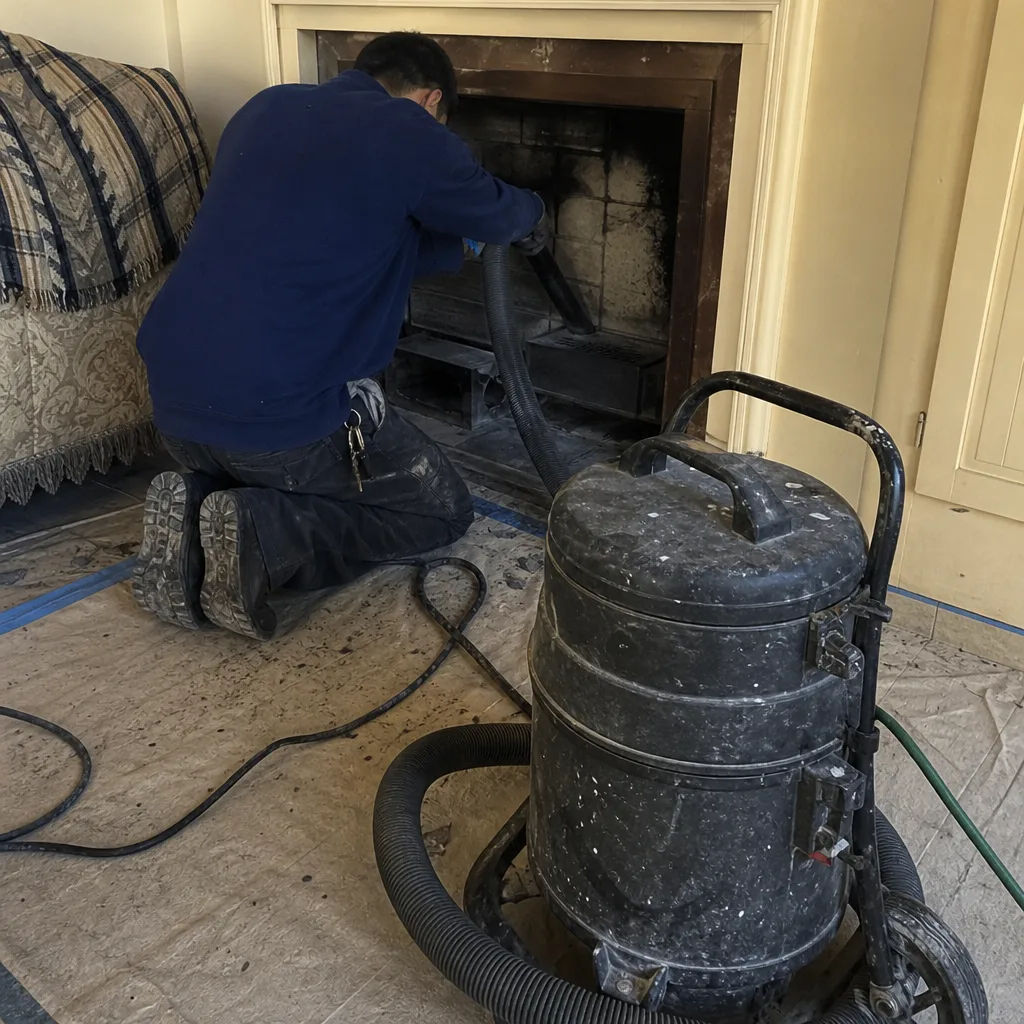 Before
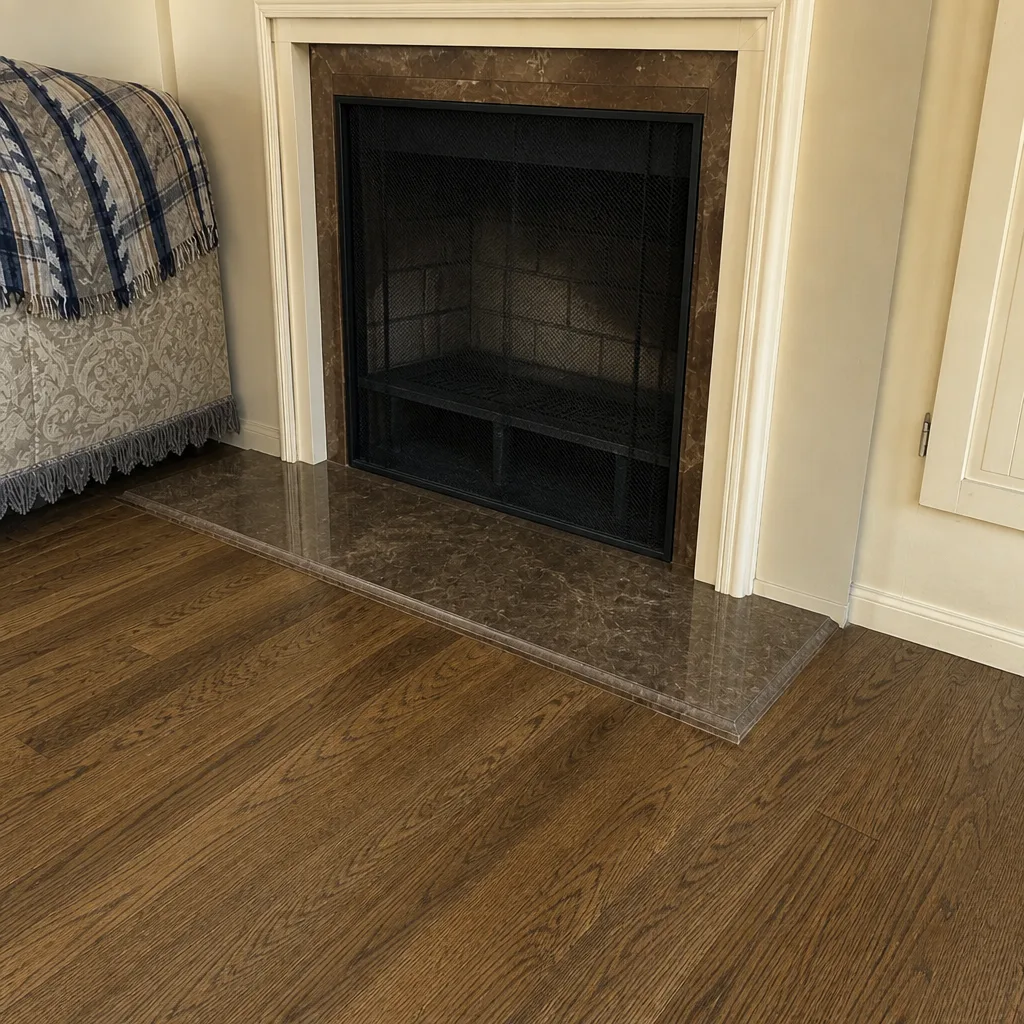 After
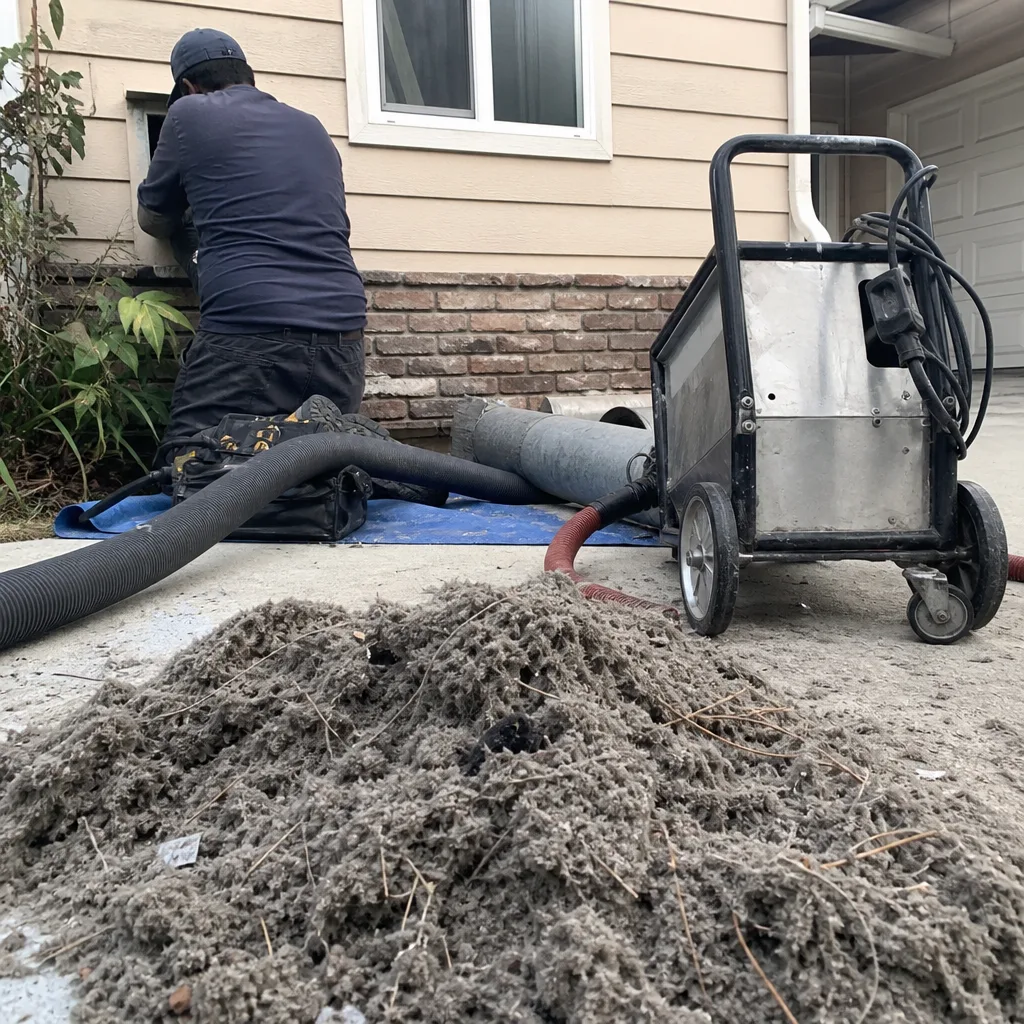 Before
 After
 Before
 After
When to Call a Professional
Some contamination is visibly harmless, and some needs to be addressed now. Call a professional if you’re seeing visible dust blowing out of registers when the system starts up, if a musty smell returns every time the air runs, if you’ve just finished a remodel, if you’ve moved into a home with no service history, if a pet or family member with asthma or allergies lives in the house, or if you’ve noticed rodent droppings or nesting material inside an accessible duct or at a register. Small systems sometimes clean up fine with a good filter; heavily contaminated or damaged systems don’t. Floral Park Air Duct Cleaning offers free estimates in Floral Park – call (833) 966-4423. We answer 24/7. Fast dispatch from 7am to 7pm, Sunday through Friday.
Frequently Asked Questions
It depends on the number of systems, the number of runs, and whether repair or sealing is needed. The honest way to price it is per system by written estimate, not per vent with an upsell once the technician is inside. Call (833) 966-4423 for an exact quote – estimates are free.
Cheap quotes almost always describe contact vacuuming at the register boots, not source-removal cleaning of the returns, trunks, and branch runs. The equipment is smaller, the job is faster, and the contamination in the trunk lines doesn’t move. A written scope is the fastest way to tell which job you’re being quoted.
Ask for before-and-after photos taken inside your own ducts, an access-point count, and an airflow check at the farthest register. Any legitimate duct cleaning visit should produce all three. If the technician can’t show them, don’t pay for the visit.
Most homes land in a 3-5 year range, with 2-3 years for homes with pets, allergy sufferers, or recent renovation work. Floral Park’s dry air means dust stays electrostatically bonded to duct walls, so waiting past the point of visible debris costs more in cleaning than it saves. Call (833) 966-4423 for a walkthrough – estimates are free.
We clean the whole air pathway – not just the registers. That means return plenums, the main trunk, branch takeoffs, supply boots, and the air handler cabinet, all under continuous negative-air pressure with Rotobrush and Nikro equipment, and with Abatement Technologies air-quality tools on heavier jobs. If you want to see what air duct cleaning covers at that level, ask us for a written scope before you book.
Dryer vents are a separate system from the HVAC ducts and they clog with highly flammable lint, so they need their own cleaning pass. We include dryer vent cleaning as a core service because a clean dryer vent is a home-safety job, not a comfort upgrade. Call (833) 966-4423 for a combined estimate – estimates are free.
The Bottom Line
A real air duct cleaning in Floral Park covers the whole air pathway – returns, trunk, branches, boots, and air handler – under continuous negative-air pressure, with rotary-brush equipment that actually breaks electrostatic dust bonding. Cleaning without repair leaves leaks that re-contaminate the work; cleaning without documentation makes it impossible to verify. Ask for a written scope, before-and-after photos of your own ducts, access-point count, and airflow verification. The price should be one flat number per system, agreed before work starts, with no per-vent math. If you’re ready for a walkthrough of your own system, we’re here to look.
Floral Park Air Duct Cleaning connects Floral Park homeowners and property managers with vetted local professionals who handle the full set of duct services – cleaning, repair, sealing, sanitizing, and dryer vent work – with professional-grade equipment and honest per-system pricing. Call (833) 966-4423 for a free estimate. We answer 24/7. Fast dispatch from 7am to 7pm, Sunday through Friday.
For a broader look at the company and the services behind this guide, visit Floral Park Air Duct Cleaning.
Written by the team at Floral Park Air Duct Cleaning.